Showing posts with label lactation consultants. Show all posts

Tuesday, August 23, 2011

The KIT Project: Help make this a reality.

I've mentioned Jennifer before, the lactation consultant who worked miracles with Lily and I. What makes her so wonderful is not just that her knowledge of breastfeeding is absolutely encyclopedic and second to none (which it is), but that she also sees beyond the symptoms, looking deeply and tirelessly into the underlying source of whatever dysfunction the dyad is expressing at the breast. It is truly holistic lactation support.

I do believe she represents the best future of lactation consultants, and should become even more of a leading voice in the community than she already is - and yet there is a whole other dimension to her life work, which includes educating parents on holistic health. Fortunately for us, she has developed a "Kit" which includes everything a parent needs to begin supporting their family's health naturally and, again, holistically.


Check out this great detailed post about the incredibly valuable content, and see what some of the parents who have benefited have to say, such as:

“…The kit has empowered me; I feel confident that I can care for my family’s health and well-being using this arsenal of knowledge Jen has given me. Before I had the kit, when my children were sick I would feel helpless to ease their symptoms and help their bodies heal, but now I have tools at my fingertips to help them to feel better and recover quickly. I highly recommend this kit, and I highly recommend Jennifer.” -- Kate Cordick-Burns Heiser, CT, USA


In order to launch this product for greater availability, some up-front investment needs to happen - but as with so many worthy projects, if everyone who encounters this gives just a little, we can make this a reality. And this NEEDS to become a reality. (I badly want this kit myself!)

So please click the IndieGoGo link above, check it out, and consider contributing! Make it so.

Friday, April 15, 2011

Goin' to Boob School.


On the board in one of our classrooms. Like it says: Boob.

In the midst of all the birthday craziness, and crossing the line from *sniff* toddler to preschooler, I also started Boob School this week! Officially, I'm part of the first degree program for lactation at Birthingway College of Midwifery, in case you missed the memo, which qualifies us to sit for the IBCLC exam. Our first day was great, a 4 hour orientation and then 4 hours of Anatomy & Physiology (which I could have transferred, but I really want the information anew). Today, sleep-deprived and homework in hand, I'm off to Breastfeeding I.

Things I theoretically want to focus on over the course of the next two years:
  • Tongue tie (obviously), based on the intensity of my own experience.
  • Low supply, both perception and reality. The fear/belief that she isn't making enough milk is one of the biggest reasons moms give up nursing, and it largely isn't true - often a growth spurt combined with a care provider not well-versed in advising moms on breastfeeding is the killer combination. And the flip side of that is that there ARE true supply issues, and I want to know everything there is to know about them.
  • Herbal galactagogues in depth. Over and over, I see the question "How do I increase my supply?" And a chorus of totally well-meaning people say, "Fenugreek!" It's just so much more complex than that, and I'm looking forward to learning all about exactly how it all functions.
  • The role of maternal nutrition, particularly with regard to food sensitivities and intolerances, something I haven't written about here yet. Or have I? No, if I have it's only been in passing. I think.
  • Women with long term challenges (again, obviously), especially in terms of using breastfeeding tools like the Lact-Aid, and with special attention to how to transition OFF the tools.
I also have an idea for a study, perhaps an independent one, that I would loooooove to do in tandem with someone, potentially a medical student or someone going for a masters, say, in public health. Possibly more people than that. If that sounds like you, buzz me! Anyway, it could possibly be a thesis, and something valuable for the field as a whole.

Whew! Is that an agenda or what? I realize things may and probably will change over the course of time - just like I thought I was going to do practically nothing but sports massage while I was in school for massage therapy, yet the work I was drawn to once I was in practice was quite different. But still, it's helpful to have some direction at first.

Wednesday, March 2, 2011

Happy IBCLC Day! (How timely is that?)


Today is the day where I thank my lucky stars that I had access to one of the very best IBCLCs out there, Jennifer Tow of Intuitive Parenting Network, LLC. Due to some serious challenges, my daughter Lily would never have been able to nurse without her expertise, immense patience and the support of her nursing support group. (If you haven't read the whole crazy epic, it's laid out here if you have the stamina.)

Our booby-trapped world needs more qualified, educated, and dare I say, real lactation consultants. The impact of bad breastfeeding information and advice (often well-intended but poorly-informed) cannot be underestimated. Take a look at this piece, aptly named "A Little Knowledge is a Dangerous Thing", about a self-styled "breastfeeding specialist" in the UK, Clare Byam Cook. She happens to be a retired midwife, but has no formal training in breastfeeding beyond her personal experience. Read the piece for yourself and cringe - then imagine how many mothers have had their breastfeeding lives impacted by this kind of sabotaging misinformation, without having any idea that this specialist is a specialist just because she decided to call herself one, and that her advice could easily sabotage a nursing relationship. Or better, check out her appearance on a British talk show comparing breast milk to Coke, among other bon mots.

Point being, beware the self-appointed expert. When seeking advice, be aware of what kind of training and experience they have*, or whether it's personal experience and self study - not at all without value, but something to be taken into account. Am I saying one HAS to be an IBCLC to have anything to offer on breastfeeding? Of course not. Mother to mother support has gone on for thousands of years. It's the very foundation of La Leche League, to whom we all owe a debt of gratitude for helping breastfeeding to reemerge after losing it for several generations.

However, those lost generations mean lost connections and often a dearth of accurate information that still affects us today, especially when it comes to addressing more serious conditions. Peer support is a fantastic thing, but being able to refer out to a specialist when needed is imperative. And I say all this from a place where I currently have my own limitations. My training has included basic breastfeeding, but extreme emphasis on the basic. Anything challenging that arises is considered beyond our scope of practice, and rightly so.

Did an IBCLC help you and your baby? Consider giving them a shout-out today.

*While the IBCLC is the gold standard, there are other designations, like the CLE and CLC. that are valuable as well. LLL leaders also go through a solid training.

Thursday, February 24, 2011

NEWS! Dou-la-la: Future IBCLC


Just got word yesterday that I've been accepted into Birthingway's brand-spanking-new lactation program, a 2 year degree that includes enough credits and clinical hours to be eligible to sit for the daunting IBCLE (the certifying exam for all IBCLCs).

ZOMG.

I am so excited, and nervous, and a little worried about balancing it with my new life, but mostly? STOKED. I still plan on eventually pursuing midwifery, likely through the same school, but in order to meet my daughter's needs, I think that this will be better suited to our lives once she is older. I'm thinking that won't be for at least 5 years, bare minimum. Probably more like 10. And in the meantime, I'll be able to work in a field I'm equally passionate about - doing doula work along the way!

Wish me luck! And lots of financial aid . . .

Friday, February 26, 2010

Dou-la-la's Top Three Breastfeeding Books

Back from Family Travel 2010, Jaunt #1 and raring to get posting again.

As it happens, the travel provided a perfect segue: while I was visiting some relatives, a new mom-to-be asked me for a breastfeeding book recommendation, and it reminded me that I've been meaning to get to this for awhile. Since I've gotten multiple requests for recommendations in a number of areas (birth, pregnancy, parenting in general, and thusandsuch), I'll make this a series. But today, let's start with la leche.

1. Hands-down, no contest, for my money, the best breastfeeding book out there is . . . "Breastfeeding Made Simple", by Kathleen Kendall-Tackett and Nancy Mohrbacher.


Why do I love it so? First, the information is spot-on, as one would expect from a book written by not one, but TWO IBCLCs (this is the gold standard for lactation consultants). They pull no punches and give the most accurate, thorough advice I have encountered in a single source. Second, I love the way this is organized. Some breastfeeding books I have received have good information and decent advice, but one would never sit down and read it from cover to cover. Rather, the inclination is to skim them initially and then cherry-pick whatever you happen to need at the moment as issues come up. There's nothing wrong with using books as wonderreferences (in fact, choice #2 falls much more into this category), but a lot of essential information can be missed this way.

Here, the authors lay out Seven Natural Laws of Breastfeeding, under which everything ultimately falls, and it flows as a wonderfully readable whole out of this structure. The natural laws are:

1. Babies Are Hardwired to Breastfeed
2. Mother's Body is Baby’s Natural Habitat
3. Better Feel and Flow Happen in the Comfort Zone
4. More Breastfeeding at First Means More Milk Later
5. Every Breastfeeding Couple Has Its Own Rhythm
6. More Milk Out = More Milk Made
7. Children Wean Naturally

I love this, because really, in essence, these laws cover everything. I do think new mothers often suffer from information overload, and this can be particularly true when it comes to breastfeeding. And, as I've often seen struggling moms bemoan, isn't this supposed to come naturally? So how come I have to read all these instructions and learn all these techniques and remember all these facts? This approach, looking at everything through the natural laws, brings it back to nature - and crucially, appeals to the right brain. Information overload is very much a left-brained circumstance, and breastfeeding is very much a right-brained activity. The authors themselves explain this here.

Yes, they then go into detail with how each law applies to real life situations, from the basics through common and not-so-common problems, but if every mom really took each of the laws to heart as-is, she's already setting herself up for success. I'm certainly not saying she might not need and want some more information - I'm a big fan of information, hence, this post, and hence, my overabundant library and praise of lactation support when needed. I do think that when the going gets tough, sometimes keeping things as simple as possible is key, and I absolutely love the simple essence of the Seven Laws.

It's also well-written, period. I found it easy to understand and very warm and relatable. Once complaint I have heard was that they tend to be anti-formula. It's true that they are forthright about the risks of artificial feeding, but I never caught any hint of judgment from them, certainly not when it comes to the minority of women who truly cannot breastfeed. They are also more than aware that inadequate support and bad advice has jeopardized the best intentions of women who really did give it their best effort, and this is expressed compassionately. And honestly, I would be disappointed and frankly perplexed by any breastfeeding book that was pro-formula. I don't expect a vegetarian cookbook to be pro-meat (not an airtight analogy, but you catch my drift).

My sole criticism is a very simple one: the lack of an index! This drove me a tiny bit crazy - I need to be able to look things up quickly and easily, even if a book is more than just a reference. But on that very note, I have good news, thanks to Kendall-Tackett befriending me on Facebook - they are currently at work on a second edition of the book, coming soon, which will indeed feature an index! I guess I wasn't the only curmudgeon dependent on them. Their website has some great resources on it too, including things impossible to include in a book, like latch videos.

In short, if you buy only ONE book about breastfeeding, this would do you very, very well. I always like to have multiple sources (to say the least), but I realize not everyone is a huge nerd on the this and related topics.

2. Second in line is "The Ultimate Breastfeeding Book of Answers" by Dr. Jack Newman.


Unlike the other two on my list, I can't say that this is a great sit-down-and-read-start-to-finish book, but it IS an excellent, thorough, accurate resource. It's also very interesting, for those interested in breastfeeding as a topic as well as an activity, to read about his experience with breastfeeding over the years as a pediatrician. Support from the medical community has come a long way in recent years (though it still has a long way to go), and it's quite something to see what the changes have been like from the 'inside'.

As you would expect, the book is chockablock with solid medical advice and steadfast faith in the power of the breastfeeding dyad. Getting the latch correct solves a multitude of problems for most mothers, and he correspondingly spends a good deal of time on the matter. Dr. Newman also has an excellent website with good videos, by the way. If you're simply a mother looking for one good, solid overview, I would say the other two on the list would be better choices, but pairing this with another book is perfect if you can swing it. And for birth/baby/boob professionals, I think it's a must for your library.

3. Finally, a surprising entry: "So That's What They're For" by Janet Tamaro.


I ignored this book for a long, long time. Years. It just struck me as a book that would be silly or even flip about the topic, and I thought the title and cover way too cutesy for me. I still don't LOVE the cover, but guess what? The book itself is, in fact, very, very good. Of the three favorites here, it is the most purely enjoyable, and contrary to my prejudices, actually delivers excellent information. Tamaro's sense of humor is scattered throughout without overdoing it - it's just the right mix of lighthearted and informative. Best of all, it really lends itself to reading cover to cover - it's as close as a breastfeeding manual can get to a page-turner.

Quibbles: Some of the information is a little out of date: for one thing, HIV recommendations have changed since publication (it's definitely complex, but not necessarily contraindicated in all situations). Food allergies and the connection between mom's diet and baby's reactions gets glossed over - an important issue for some moms. Tamaro is also a bit underinformed about medications and breastfeeding, and takes a relatively conservative approach to the topic, when in fact many medications are compatible with breastfeeding, often unbeknownst to the prescribing physicians themselves, as they're simply untrained in lactation. (The Hale Guide is THE way to go here.)

But the complaints are very much outweighed by the very strong, solid basics, conveyed in an entertaining way - a tough balance to strike for many authors, and it's such an important one. Amusing or revealing anecdotes illustrate key points without overshadowing the core information, which is no easy feat. Tamaro does a good job covering some common challenges as well.

I'm so thankful I finally gave this a try, on a whim. It's a great fit for so many prospective and current breastfeeders out there - I'll be lending and recommending it liberally. What's that saying, you can't judge a something by its something? Yep.

Monday, February 1, 2010

Ready, Set, Suck: On breastfeeding marketing & Medela's WHO violations

It came to my attention not too long ago that Medela, probably the largest manufacturer of breastfeeding-related products, might be less than squeaky clean in terms of their compliance with the very important WHO Code regarding marketing of formula, bottles, and other breast & breastmilk replacing products. But I managed to coast along in denial for a while longer, having had Medela products play such a huge role in my daughter's long and exhausting road to the breast.

Their high quality, extremely efficient Advanced Pump in Style double electric breast pump was what got Lily fed, period, for the first 5 months of her life, while my LC and I worked at various strategies to get her to latch. Using the SNS was an important step we needed to take along the way (though I ultimately found the Lact-Aid to be superior), as were their nipple shields. And primarily because I became emotionally invested in them, I also purchased accessories like their breastmilk storage bags, breast shells to help draw out flat or inverted nipples (and to air-dry them if sore or healing), their travel wipes for the pump, and the microwave steam cleaning bags. It’s convenient when the pump you’re using fits with the bottles you want to use, when replacement attachments are readily available, and when you feel like there’s a consistent quality there that you can trust. I completely understand that kind of brand loyalty.

Because I was such a loyal customer, it was all the more stinging to read this post by PhD in Parenting last week, full of serious truthiness as it is. I won't rehash the entire thing here, as she has done such a good job already, as did the above much earlier post from Hoyden About Town - do go check them out for yourself. Suffice it to say that not only has Medela flipped the bird at the code, marketing bottles in violation, they're now making matters even worse with this sly, underhanded "Medela Mom Mavens" campaign.

I can understand, to a degree, that it's a tricky line to walk at times. Having some of these products available, like the ones my daughter and I benefited from during our insane nursing saga, is important. They should be available to moms who need them, and easily so. I am thankful that when I needed a different size nipple shield, I was able to run out to the local big box baby store (more on that in a sec) and pick one up. I'm thankful that replacement attachments for the pump were similarly conveniently available. I am thankful that the moment it seemed like my situation might call for an SNS, my LC was able to hand me one immediately. Such breastfeeding support products can make a HUGE difference in breastfeeding success when there are complications. As Annie at PhD in Parenting says:

I don’t want to be overly critical of Medela. I think the company does a great job promoting and facilitating breastfeeding. Most of the information on its website is wonderful. Most of its products are of the highest quality. I have been nothing but happy with my Medela products. However, I do think that some of their current actions to promote their bottles are inappropriate. It would not be difficult for Medela to continue to promote breastfeeding and sell its bottles without promoting them. However, it has chosen to ignore the WHO Code and push more bottle imagery and bottle messaging on moms (more on why bottle imagery and messaging is hurtful here). The result is that Medela is directly pushing bottles on moms and also doing so indirectly via the Medela Mavens and others who might pick up on the message about how breastfeeding ties you down, so you really need a pump and bottles so you can get your hair done.

To be clear, on a sliding scale this is not even close to Enfamil or Nestle or other formula companies. Not even close. But I would argue, and others do argue, that any violation of the WHO Code weakens its potential impact. We cannot say “it’s okay because you are Medela,” but then slap Nestle on the hand for everything it does wrong.
Lines have been crossed, not only in the clearer terms of promoting their "breastmilk bottles", but in the more nebulous grey area of promoting products over breastfeeding. I've been mulling all this over for a few days, and trying to find a way to put that thought into words, and then I went to the big box baby store yesterday, a trip that was disappointing on two levels.

I was there to drop off some flyers for the upcoming doula training I'm sponsoring, as well as some business cards. The last few times I was there (hey, pickin's are slim in this town), probably 2 months ago or so, there was a small table behind the registry area where local birth and baby-related services could leave their materials. There was never a lot, but there was a brochure for an independent childbirth class, cards for a breastfeeding support group, a small calendar of mom's playgroup activities, that kind of thing.

When I walked in yesterday, the table was empty. I asked an employee whether it had moved, or if there was another area to post about things like childbirth classes - a community message board, perhaps. She told me that no, they had decided to not allow outside materials any longer. Disappointment #1, in terms of small businesses and independent agencies. But hey, she said, they have some classes of their own! She pointed out the board below:

Here's a closer look:

A "Breastfeeding 101" workshop, sponsored by You Know Who! A basics of breastfeeding class whose description begins with "Ready, set, pump!"

If that doesn't make their priorities clear, I don't know what will. Believe me, I know firsthand that a pump is sometimes absolutely essential. And certainly it is for mothers who work outside the home. Hallelujah for them, seriously. But a breastfeeding class that focuses first and foremost on pumping? The rest of the description: "Get the scoop on breastfeeding and all the great products sure to make it easy to feed baby naturally." I mean, it's not that I was surprised to see a live, in-person infomercial for Medela products disguised as a breastfeeding "class". Especially not at a big box store (with similar classes in car seats, sponsored by Graco, and the like). I'm not so naive. Just very, very disappointed.

So, like many other lactivist moms out there, I can no longer in good conscience continue to promote Medela products. So what to recommend in its place? Just West of Crunchy has an excellent and thorough post on the matter, which starts out bemoaning the same state of affairs and then goes on to explain the Hygeia and Ameda pumps, both of which sound great - in addition to being WHO compliant, and proudly so, unlike some people, they are also closed system pumps, much preferable to Medela's open systems. She explains it all adeptly here:

If more mothers knew the facts about their beloved Pump in Style pumps, Medela would be selling a lot less of them. And I can speak from experience, I have a PIS sitting in my closet, waiting to die a slow death in a landfill.

Why? Because it can't be given to anyone else. That's right, my $280 breastpump has to be tossed in the trash. It's not FDA approved for more than one user. Even though I only used it maybe 30 times. And I know there's a huge black market for the sale and donation of used single-user pumps, but you know what? Even if I could, I wouldn't give the thing away to another mom. Because once you know the facts on the Medela pumps, you won't want to use them.

There are "closed system" pumps and "open system" pumps. Medela is the latter. Having an "open system" means that milk can contaminate the tubing and the motor to the pump. And while the tubing can be cleaned or replaced, the motor cannot. Which means if my milk makes it into the motor, so could a hypothetical seccond user's, at which a time they'd mix. The motor can't be cleaned or sanitized, and there's no way to know if milk ever contaminated it. So, if you're using a second-hand pump, it might be clean, or it might not. Your guess is as good as mine.

But even if you follow the rules an purchase a new Medela pump, keep it, and never allow it to be used by a second party, you can still have problems. It's important to note that Medela is completely open about their pumps being single-use only, they're very forthright about that. The information that's lacking, though, is that you can actually end up with MOLD in your pump motor and tubing, due to the open system design. The milk that you can't see in the motor - that you have no way of knowing whether it's there or not - can grow mold inside your pump. You can also end up with mold in the tubing (a lesser problem, as that's replaceable).

I don't know about you, but I'd rather have a pump that has ZERO chance of developing mold in its motor. Both Hygeia and Ameda offer pumps that have closed systems. You're not going to get milk in them, because the way they're designed, there's no backflow. Not only are these WHO Code compliant companies, they make superior products!

I took a look at Big Box Baby Store's pumps to see if they had either of the above. Nope. [See update below!] They had one Lansinoh electric pump, and one Evenflo hand pump, and the rest was, of course, all Medela, all the time. So, it's frustrating. Medela is no doubt the most widely available. You can go see them for yourself, talk to a salesperson, and take one home the same day. Ordering things online is less appealing and even prohibitive for some people. But I have to recommend doing so nonetheless, at least until/unless Medela does a serious 180 (and I would be thrilled if they did). If you're lucky enough to live in an area with smaller businesses that might sell alternative pumps directly, then hooray (for that among other reasons).

What about some of the other products, though? Smaller ticket, yes, maybe not as big a deal to the company, but still. I can make a few recommendations. For the best storage bags: I always liked Lansinoh's. And I honestly would recommend the Lact-Aid over the SNS even if Medela was behaving ethically - same basic concept, but the difference in user-friendliness is HUGE, and again I must point out that Lily would NOT be nursing today were it not for the Lact-Aid - along with the brilliance of my LC of course. But I digress: As for nipple shields, that's one where I'm stumped. Breast shells as well - I know that for drawing out inverted nipples, Supple Cups are now available, and reputed to be very good, but for helping to air-dry sore or wounded nipples, I'm not familiar with an alternate brand. Lactation pros, moms with nursing challenge experience, do you have any ideas? Please chime in.

I close with the following from the Hoyden About Town piece, on the insidiousness of Medela's current marketing:
[Medela's commercial states:] “When you choose to breastfeed, you’re doing what’s best for your baby. When you choose Medela breastfeeding products, you’re doing what’s best for you both.”

Medela is saying, directly, that breastfeeding is not best for women. It might be ok for babies, sure, because they get the breastmilk, but Medela is telling us loud and clear that pumping is better for mothers than breastfeeding is. No qualifications, no circumstances; just “pumping and bottle-feeding is best for women”, with a side serve of “and it’s just as good for babies”.

This isn’t just a WHO Code violation; it’s not true. And it’s a lie fed by all of our dysfunctional societal issues around breasts and breastfeeding and public feeding and mother-child attachment and women and the workplace. It’s fed by the huge pile of myths about how easy pumping is, and about how bottled stored breastmilk is just as good, and about how it’s vital to schedule feeds and “see how much babies are taking”, and about how babies don’t know when they’re hungry or thirsty or full or in need of comfort. The problem is, it isn’t just fed by those dysfunctions, it’s feeding back into them, reinforcing them.

These sorts of advertisements are part of the huge coercive societal mechanism denying support for mothers and children, part of the capitalist machine preventing women from being able to afford time with new babies, and keeping them being good little workers and consumers. I think it’s no coincidence that two countries with no moves towards a full legislative implementation of the Code, the USA and Australia, are also the only two industrialised countries in the world without mandatory paid maternity leave.

Words mean stuff. Marketing is powerful. Advertising works.

And it makes a whoooole lot of money.

*****

UPDATE 8/31/10: Ameda pumps are available in Babies R Us nationwide now, and not only that, the Lansinoh double-electric pump for $150 is actually an Ameda pump, rebranded, and at half the price.

*The hospital-grade pump Symphony pump IS a closed system, so this is the one exception in the Medela line, ethical issues notwithstanding. Moms needing to rent these when there's not an alternative brand available should feel safe.

Wednesday, December 30, 2009

Wordless Wednesday: My Future IBCLC

I'm now tandem nursing, apparently, as per Lily's demands.


Future lactation consultant? "Positioning looks good, now let's work on that latch."


Examining tongue for possible tight frenulum.


Changing the diaper (hey, it even came with cloth).


The really funny thing? I have to back up a little here. Despite my referring to it as "nursie" or just "nurse" from day one, Lily insisted on inventing her own word for breastfeeding, which is not in any known language but basically sounds like "Boh-tee" or "Buh-tea". So random, right?

Well, one day, Aaron (her daddy) forwarded me this, which he had just come across and which completely weirded him out. Normally I don't pass these kinds of tired old "isn't extended breastfeeding freaksome" sketches along, for obvious reasons (tired, old), but here's the thing: listen to what he calls it.


Whoa, right?

And the name of her first doll, the baby version of the American Girl line, pictured here, that she got for Christmas? Bitty Baby.

*boggle*

Friday, November 20, 2009

From continuous support to a continuum of support

The third Healthy Birth Blog Carnival is nigh, and, following the other great Carnivals on Lamaze's Healthy Birth Practices, this time Science and Sensibility is calling for entries on the third practice: Bring a loved one, friend, or doula for continuous support.

Seems like a no-brainer for me to weigh in on, no? Well, you see, I am but a young padawan doula. Number of births I have attended in person thus far: one (mine). Much as I aspire to not only start attending births as a doula but eventually train as a midwife, I'm still very much inexperienced in the real birth world despite my book and web-learnin' on the matter. I am sure this Blog Carnival will offer up scores of excellent posts by birth veterans, detailing the benefits of that incredibly important continuous support during labor, as well as birth stories in which that labor support person (whether a pro or a family member or otherwise) plays a vital role in healthy, satisfying birth experiences, and I look forward to reading them.

But here's something that's been on my mind as a newbie doula (which I recently realized makes me a 'doubie'): I'm starting to feel that even within the midwifery model of care, the amount of support a woman gets drops off dramatically after the first few days postpartum. Forgive me if I'm playing Captain Obvious here, but I'm currently witnessing the impact of this firsthand, as well as starting to see this pattern in the birth, breastfeeding, and postpartum depression stories I read so voraciously, both in print and online.

Nowhere is this more apparent than in births that have taken place in hospital settings, of course. Let's take the matter of nursing for just one example of the value of postpartum support. A woman heads home after a birth which may or may not have gone smoothly, where she may have received terrible breastfeeding advice, where she may have been separated from her baby, where her baby may have been given formula from a bottle with or without her consent or even knowledge. She may have even been given a "gift bag" containing you-know-what. Think about this mother headed out of the hospital has been really been set up. She may already be on a downward spiral.

Let's say, though, for argument's sake, none of the negatives in the hospital scenario above have happened. Let's say that in every instance, she experienced the best case scenario: no artificial nipples, no separation, a good birth, and so on. The environment at home can vary WILDLY in terms of what kind of support she has, in terms of both quantity and quality. The father most likely only has a few weeks of paternity leave, if that. She may have extended family living nearby, but this is becoming rarer and rarer in contemporary society, so she might have her own parents or in-laws coming to visit and help out for a while. She may or may not have friends in the area who can help out here and there; sometimes a meal rotation has been set up for the first week or two.

Within whatever existing support system she does have, there may be experienced, knowledgeable breastfeeders - and there may not be. If many of the less desirable variables are present, any difficulty she experiences can be exacerbated. So many nursing relationships can be sabotaged by well-meaning but ignorant advice. If the mother had hired a birth doula, a few postpartum visits are typically included, which is a help, but is it enough to make up for regular, quality help from the rest of the mother's support system?

Even if we take the hospital out of the picture, continuity of postpartum care can be lacking. She might have even had a home birth. Midwifery care does provide for MORE postpartum care than a hospital birth provides, typically scheduling a visit for the day after, then the third day (often a day of reckoning), then a week later. It's definitely an improvement, but I feel that a lack of regular support at home, and lack of accessible and timely lactation support, can still be devastating. Midwives who attend home births (primarily CPMs but also some CNMs) may or may not be skilled in lactation support. I think it's fair to say that most know the basics, and the type of sabotage that sometimes occurs in hospital settings is highly unlikely, but when serious issues come up, the variation in skill becomes much more crucial.

When more lactation help is needed, then, outside help needs to be called for, creating a new set of variables in terms of skill and accessibility, as not all lactation consultants are created equal, and the best ones may not be in the area, or may be out of a price range. Days or even weeks can go by before help arrives, time during which the breastfeeding relationship can be damaged in a number of ways.

I don't know if there are existing studies comparing the connection between breastfeeding success rates and better postpartum support, but from what I understand, many developed countries which have universal health care also provide for home health care visits for all new mothers. Here's one glance at different countries and their breastfeeding rates from the
State of the World's Newborns Report 2001 via Kellymom:

Breastfeeding Rates Around the World

Country % of mothers who start % who continue 6 months or longer

Sweden 98 53
Norway 98 50
Poland 93 10
Canada 80 24
Netherlands 68 25
Britain 63 21
United States 57 20


Is it asking too much of midwives that they also be well-versed in breastfeeding support, and that they spend more time devoted to postpartum care? I don't mean to ask this as an accusing rhetorical question. It really may be too much, given the depth of their expertise in birth and the devotion it takes to acquire their skills, not to mention the considerable existing demands on their time - and if that's true, then we need to start thinking about finding ways to pass that baton to another support provider much more regularly and smoothly than we currently often do.

There is La Leche League, if you have an active chapter in your area with good leaders who will do phone consultations, which is not a guarantee, and honestly not a substitute for one-on-one help from a trained professional. Speaking of, then there are the lactation professionals, the gold standard of which is the IBCLC. Fantastic people, most of them are - if you have access, and even still, there is a break in the continuity of care, a disconnect, a stranger stepping in.

Another factor in postpartum support of the friends & family variety: it tends to peak within the first few weeks, which is when such support IS most needed (particularly in terms of breastfeeding), true, but many mothers find that they really could use help beyond that initial period. Suddenly, dad is back to work, family returns home, friends have gotten their fill of the novelty of the new baby, and the meal rotation comes to a close. Suddenly mom finds herself more alone than ever, which brings me to another area where postpartum support is vital: postpartum depression, or more accurately, the spectrum of postpartum mood disorders.

Isolation is a huge risk factor here, and feeling 'abandoned' once the baby is 3 or 4 weeks old can feel devastating to a mother. In my DONA postpartum training, listed within the services that a postpartum doula provides, right alongside education in newborn care, aid in mom's emotional and physical recovery, light housework, and breastfeeding support, is "companionship". Simple as that. This is not an insignificant or trivial thing. Having another adult around to relate to can really be a lifeline to a mom who is sleep-deprived and struggling, especially if that adult is trained in recognizing the symptoms of postpartum mood disorders.

You can see where I'm going with all this. My bias as a new and eager postpartum doula is showing, I know. But I think there's a case for shifting our view of the journey to motherhood. The moment of birth IS profound and amazing and deserves the most devoted support throughout that experience as possible - but can we start to see that this is just one part of the journey, climactic though it may be? Can we start to see it as more of a continuum? What would it be like if something resembling continuous support (though obviously not as intensive or constant as labor support) lasted throughout what has become widely recognized as the "fourth trimester"?

After the long buildup of pregnancy, and the transforming apex that is birth, with much societal (not to mention medical) attention paid to both, many women often get the relative equivalent of a handshake and a "good luck!" Women and babies deserve more. WE as a whole deserve more. I'm not sure what form this would take. I like the concept of reframing care as, perhaps, perinatal, rather than divided into prenatal, birth, and postpartum. I absolutely think postpartum doulas are one way of finding a solution, of course, but I don't mean to make this post one big sales pitch for them (especially, again, as a novice). I'm open to more solutions. Maybe the concept of Freestanding Maternity Centers, as Rixa of Stand and Deliver recently pointed mentioned recently. and as Dr. Stuart Fischbein has endorsed, could include more extensive postpartum support that flows out of existing relationships, and could thus move towards more of a continuum concept, to twist a phrase.

I've focused here on breastfeeding and to a lesser degree on postpartum mood disorders, but even if neither proves to be a problem, mothers still deserve to have much more support during their "babymoon" than they often get. These were just examples of postpartum needs - there are so many others, too. Adjusting to our brand-new identities as mothers is an world-shattering experience - hopefully mostly in the best possible ways, but in the event that challenges arise, I think mothers with newborns deserve to have the equivalent of counterpressure on their sacrums, cool cloths held on their foreheads, and strong, caring hands to hold when the going gets tough.

Sunday, October 25, 2009

Teaching a mom to fish, leading a mom to water

So as you may know, I completed my three-day postpartum doula training through DONA a few weekends ago. This is just one step of the certification process, but it's the biggest one, and I enjoyed it thoroughly. I was worried about being away from my daughter for so long - over 12 hours every day, including the commute, but she was a total champ, and I think it was good for her and Daddy to spend so much time together. I was also pleased to see that I can still pump a good amount of milk, at 18 months, which I did in a corner of the conference room every 3 hours or so.

We learned an incredible amount in such a short span of time - it would be ludicrous to try and reproduce or even summarize it here. The underlying refrain we kept coming back to, no matter what the topic was (infant bathing, nursing, integrating older siblings, addressing postpartum depression, light housekeeping) is the phrase "maximizing self-sufficiency". Sounds a little bit corporate speak, right? A little approved-by-committee? Yep, I get that - but it's also pretty spot-on, and really helps to distinguish a huge part of how postpartum doulas are different from, say, housecleaning services or babysitters or even "mother's helpers". There IS some overlap, some grey area, with those services, and we will often be doing a bit of all those things.

Part of the difference does have to do with additional training in breastfeeding, recognizing postpartum depression, and overall postnatal recovery. Part of it is the multifunctional nature of it, since we do a little bit of everything, including some grunt work (especially at first), but there's more to it than that. It's much more about helping the family to slowly become more and more capable of doing all these things on their own, focusing on how best to support the new, confident mother. At first, the job may involve doing the laundry pretty regularly. But then, what happens when the term of employment is over, and mom never figured out how to work it into her routine, and doesn't know what settings and products are best for the cloth diapers and baby clothes, and hasn't worked out a trade-off with her partner on laundry duty? When the doula departs for good, and hasn't addressed that, she's just leaving a void where her services used to be. She just made the family dependent on her for doing their laundry, and now what?

So it's the classic adage, made maternal: if you give a mom a fish, she eats for a day. But if you teach her how to fish for herself, she eats for a lifetime. And at first, just getting her to eat for a day may be the most important thing - but the long-term needs to be kept in mind. This was a really important revelation for me.

It was also interesting/amusing/embarrassing to see just how many things I had done DEAD WRONG with my first very unofficial client that I had taken on the week right before the workshop. (I had put the word out that I was going to be seeking practice clients soon, and this mom needed help, so, I figured, why not? She knew I was pre-training, and was happy to pay the extremely reduced rate, and just needed the extra hand.) For one thing, we are never, ever to install car seats for clients, for what in hindsight are obvious liability issues. D'oh! But in the moment, that's what she needed done, so I just went ahead and did it. For another, we are never ever ever ever to drive the children anywhere. No way, no how, for even more obvious reasons. That one I could really smack myself for, but in the moment, again, she asked if I would just drive the loaded-in kiddos (four total, including the new wee bairn) around the block a few times while she got dressed before departure for an outing, and I just said, "Okay, sure!' GAH, when I think of what could have happened . . . but now I know better. There were a few other instances too, more benign than those examples but still a little off from the postpartum standard of practice. Ah well - I feel all the more professional now.

Now for the other adage - one that is considerably harder. I'm working with my first 'real' client now (still part of the certification process, but post-training), and wouldn't you know I get a HUGE challenge right out of the gate. This mom is working on breastfeeding after a reduction, and is having some serious challenges. I am having a really tough time with the limitations of our scope of practice as doulas. We do have training in the basics of breastfeeding, but anything even slightly out of the ordinary and we are to refer, refer, refer. Well, she's already seen a lactation consultant, but frankly, either this LC is terrible or mom is not quite following the directives. Whichever one it is, I am really struggling against what I suspect is some bad information, and what I know are some counterproductive practices. So I'm already frustrated with how my hands are tied as a doula when it comes to breastfeeding. So much so that I'm thinking more and more about becoming a lactation counselor (and maybe eventually an IBCLC), but that's too far in the future to help me now.

I want to encourage this mama more than anything, but I CANNOT push her. I'm not sure I should get into the specifics here due to client confidentiality issues, but suffice it to say, I am doing my best to offer as much good information as possible, and making it as easy as possible to organize their lives around the practices that will support nursing - and her supply - as much as possible. One of the hardest things is having had the extreme difficulty of my own nursing experience and NOT sharing the information that I learned from that experience with her. DONA really drilled this into our heads, too -it isn't about us.

I understand the values and the rationale behind that, and with why keeping that in mind is important, but honestly, it's just not possible to remain 100% pure about that. If we learned a trick that was really useful in diaper changing, of course we're going to teach that to our clients, so why would I not be able to offer coaching in using a Lact-Aid, for example? So yes, I've broken the rule a bit already, despite my efforts to keep personal experience minimized and focus on information from expert sources (I bring printouts of articles and other handouts to pretty much every visit).

After our third visit, I got in touch with my own brilliant guru of a lactation consultant, to bounce some things off her. She had some great specific advice, but more importantly, she recommended making the mother state aloud exactly what her goals are - because, honestly, I never actually asked her what they were, specifically. It wasn't on the DONA questionnaire that I gave her. Perhaps no one had asked her this. A rookie mistake, maybe, but when she said this, I realized that I had been approaching this as what *I* would do, according to what MY goals would be, instead of having her articulate it to me, and for herself. Big difference.

And then, she said, the path is to ask yourself each step along the way: "Are the steps I'm taking now steps that will get me closer to my goal, or further away from it?" I remember having to ask myself that every day - every feeding, even. So I asked her to state what her OWN goals were (it was in the context of reviewing a questionnaire, so it fit perfectly & didn't feel confrontational). She right away distinguished what she perceived as "Ideal" vs. "Realistic", which I thought was revealing, and we took it from there.

The BFAR book is titled "Defining Your Own Success", and it's a double-edged sword, of a concept, in my opinion. Some women post-reduction may REALLY try everything and still not be able to produce 100% for their babies. So for them, it's important to be okay with redefining success for themselves, and not feeling like a failure because they are not able to exclusively breastfeed. I absolutely get that. But the flip side of that is that some other women are going to set such low expectations and even hopes for themselves from the beginning, that, as we can see, completely undermines and possibly even sabotages their efforts and intentions from the beginning.

So if my LC's process is to be followed, as long as every day, the mother consciously takes the steps she knows she needs to take in order to move toward her goal, THAT is success. That's defining your own success with integrity. There's nothing to feel guilty about if you've taken the steps towards your own goal, whatever that might be, and it doesn't work out perfectly for reasons you cannot control. If you know the steps you need to take for your own goal, whatever that is, and are not willing to take them, well, then, that's a little different. So I want to make sure that she is as well-informed as possible, and that she herself is clear on her goals, and that she herself is clear on the steps that are to be taken, in her own mind.

So my revised plan with my client (who I really like and respect, incidentally) is to try to keep reminding her of her own goals and the steps that we identified together as the ones that are most supportive of her ideal, and continue trying to integrate those steps into her daily life. And the biggest personal challenge for me is to not take it personally when she makes different choices - and remember that (here's that second adage) I can lead her to water, but I cannot make her drink. I can help her find the best water there is, I can put it into beautiful glasses with ice cubes and fresh lemon wedges, I can create a comfortable place for her to sit and have the water . . . but I cannot force her to drink it.

Monday, September 28, 2009

Becoming Alice

So, I have my first gig as a postpartum doula this week. I'm so excited, and also really anxious about it! We spoke on the phone tonight. She just had her fourth baby on Friday - talk about fresh out of the chute! I'll be doing about 7-8 hours Tuesday-Thursday this week (and we'll re-evaluate then to see if she wants one additional week).

I was going to have to limit it to 3 or MAYBE 4 hours due to Lily being brand new to day care (sob) . . . but then my client asked if I would be okay with bringing Lily with me, which pretty much solves everything! I wouldn't have presumed to suggest it myself, especially my first time out, with a brand-new client, during our first week of service to boot, but she just needs the help so much that it's worth it to her. I'm reducing my rate a tiny bit as a result of that (knowing my attention will be slightly more divided), and it was already very low due to the fact that I'm currently in the midst of the training process, so I feel this is a fair tradeoff.

As she already has 3 other kids, all boys, a lot of it will be helping care for the other kids and doing household chores. That's all good. Here's what I'm most anxious about, along with generally being sure that I'm really being of value to her: she said that she really needs a lot of support with breastfeeding. When I first learned about her, I assumed she'd have it down pat since this was her 4th kid. But she has inverted nipples, and thus needs a lot of help. Yes, she's experienced, but part of that experience includes knowing that she needs extra help. Goes to show what assuming will do . . .

I know what you're thinking - but Anne, you know tons about breastfeeding. And I do, yeah, but having gone through such a trial myself, and knowing just how absolutely BAFFLING, not to mention emotionally charged, nursing difficulties can really be when you're in the midst of it . . . I'm just so afraid I won't be able to help her enough. My own nipples were a little flat, so I do have some experience with it, but inverted is even harder. I'm of course going to look up everything I can on inverted nipples on kellymom and in Jack Newman's book, which I'm going to do here in just a minute.

Anyway, wish me luck! Any advice you have for dealing with inverted nipples would be most welcome, too.

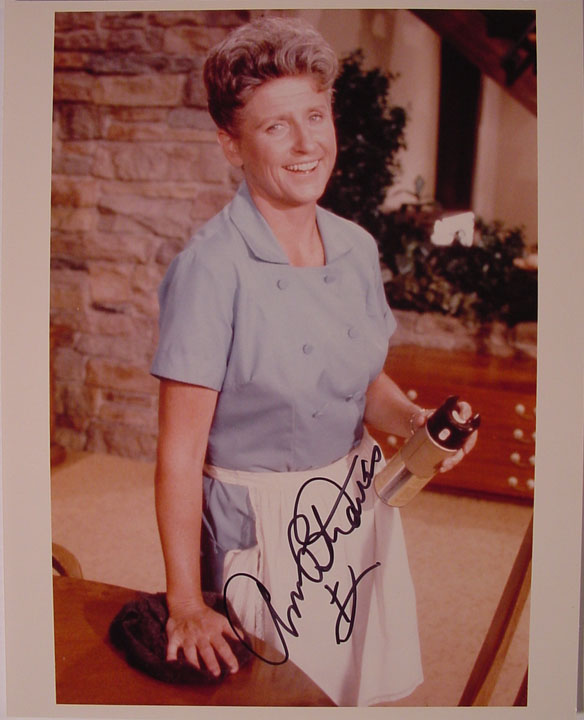
(She told her husband "I need an 'Alice'," which is kind of a great description of what postpartum doulas offer, if The Brady Bunch featured lactation information and help with care for a tender perineum.)

Monday, August 3, 2009

Our nursing saga

In honor of World Breastfeeding Week, I thought I would share my saga with you. If I can give even a glimmer of hope to any mom out there who is struggling like I was, it is all worthwhile. I tried to condense it somewhat, but in order to really tell the whole story I had to, well, tell the whole story. Buckle your seatbelt and bear with me.


So this is the tale. I’ll start at the end: Lily will be 16 months old as of August 14th, and we have been fully and purely on the breast for just about 11 months now. It took a long time after finally succeeding for it to seem real. It’s a dream come true, and something I’ve worked for harder than I ever worked at anything in my life, hands-down.

Lily had what amounts to a Perfect Storm of elements stacked against her. They were:
  • A posterior tongue tie. This was probably the most significant hindrance to her nursing. For those who don’t know, a tongue tie is a condition where the frenulum underneath the tongue is too restrictive for the baby to latch on properly. There are 4 different grades of tongue ties, too. Some care providers may mean well but are not familiar with anything but the most obvious tie – the anterior one that’s right up at the front & very obvious and stringy. Hers was much further back, and the tongue itself appeared to be 'bunched' in the back of her mouth. Some babies are able to nurse with some kinds of tongue tie (though it’s often with the cost of pain to the mom), but this one was totally non-functional.
  • Extreme molding to her skull from birth. All babies born vaginally have some degree of molding – the fontanels are designed to work that way – but this was really dramatic, and it didn't normalize after birth the way most babies' heads do (normal nursing actually helps this process along). This resulted in two things: first, there were some structural problems with her jaw function (think about how interconnected everything in that area is), making it a bit recessed; she simply could not open her mouth wide enough to latch. Second, the molding may have contributed to a couple of neurological delays (nerves essential to coordination can be impinged due to molding and also the associated swelling). When her suckle was checked by various care providers, they all noted the lack of organization.
  • Being an early arrival. She was born at between 36 and 37 weeks – she qualified as full-term according to her newborn exam, but was just an early bird. According to a lot of practitioners, the early ones can just have a harder time getting started sometimes. This caused some concern in the first few days even BEFORE we started to figure out that the two issues above were going to cause serious problems. She had no rooting reflex at first, and for the first 2 days would barely suck – whenever an expert finger was inserted to assess what was going on, rather than sucking the way normal babies do, she would mostly just clamp down on it. I had to squeeze colostrum into her mouth, and out of concern that my milk wouldn’t come in without her actively, regularly suckling, I started pumping right away – and thank GOD I did (more on that later).
  • My nipples being small and kinda flat. If there were no other issues, a normal baby would probably have done okay with me, but Lily’s challenges made this an added factor.
  • And if the above weren’t enough, her tongue, even after being clipped, is a small one, and her palate is very high (this is common with tongue-tied babies) – making it very difficult for her to get my nipple in her mouth far enough to pump it against the roof of her mouth, the way an efficient nurser can.

Are you exhausted yet?

So. Man, I’m not sure where to begin with explaining what our approach was. The first few weeks were so terrifying, which made way for a prolonged period of stressed-out, anxious grief, and then settled into just months upon months of hard, hard work. All day, every day, every feeding, and with all the work that surrounded every feeding, including pumping every 3 hours around the clock, after every feeding, no matter what. This included setting the alarm clock for 3 am and 6 am, even if Lily was asleep - I couldn't risk going more than 4 hours without pumping, as prolactin levels will then drop, and supply is compromised.

I should also note that due to a complicated if temporary long-distance situation, her father, Aaron, was only with us about ¼ of the time, so the rest of the time I was also doing this as, essentially, a single mom, living in a pretty isolated area, with one good friend who was willing to come by about once a week. Aaron was a supportive as he could be under the circumstances, but I was still just plain alone the majority of the time. The Food Network was my most significant adult contact on a day-to-day basis.

I think I can best illustrate it with a list, in order, of the techniques and treatments we used.

1. Finger-feeding with a syringe. The story of our first two weeks is really a saga in itself, and as this is already verging on epic, I won’t recount the entire thing. Here’s a thread I started at MDC when she was two weeks old describing the situation at that point, if you want the details. Suffice it to say that it became clear that she simply was not latching on. Syringe feeding was recommended by the first lactation consultant that helped us, and it did the trick to get food into her (always priority one) while avoiding nipple confusion, which is extremely important, but it also did nothing to help her learn to latch on. I kept trying to offer the breast at every feeding, but had no real skills or game plan – and I think we had come to the end of this LC’s ability to help us. This went on for a ridiculous 5 weeks.


2. During this time, I started taking her to get craniosacral/chiropractic work, starting at about 3 weeks. This was to help with her jaw function, to get her to be able to open her mouth wide enough to latch, and also to encourage the tongue to come forward. This would also help with some neurological disorganization (the coordination required for nursing, and taken for granted with most babies, was simply not there). She has gotten regular work done ever since, though decreasing in frequency after the first 4 months. This was very important, despite our financial hardship, and helped tremendously in ways that extend even beyond breastfeeding, but during that first 5 weeks, I was hoping that the combination of finger feeding and craniosacral would cause her to magically be able to open wide and latch on all of a sudden. This was not to be – there was no way this could happen without . . .

3. Getting her tongue clipped. Her tongue tie was finally identified by the second lactation consultant we went to, Jennifer, an absolutely brilliant IBCLC that came highly recommended by several different people who had had difficulties similar to ours. There are 4 different grades of tongue tie, actually, and hers was a posterior one, probably the hardest to identify to a non-expert. Here’s a great list of resources about tongue tie, including an article written by Dr. Elizabeth Coryllos, the pediatric surgeon who performed Lily’s clipping.

4. My mom was visiting from out of town when I went to get this clipping at 5 weeks, requiring a drive to Long Island with our 5 week old babe. After that was taken care of, Jennifer had us switch to finger feeding without the syringe – simply putting one end of the tube into a container and requiring Lily to much more actively suck it out. This didn’t last long, as it was taking her about an hour and a half to finish a feeding of about 2 ounces, giving me only an hour or so relief in between each feeding, in which time I had to pump* on top of doing everything else involved with caring for a baby, as well as, ya know, eat and pee and maybe even sleep occasionally.

*NOTE: Speaking of pumping, this was, despite the work and time involved, an extremely lucky break. Attempting to mimic my baby’s feeding pattern, I pumped for 15 minutes after every feeding of hers (so on top of at least a total of four hours of that combined per day, there was the associated cleaning of equipment and maintenance of the milk). I was blessed (though it’s a mixed blessing) with an oversupply, and by the time I went to see Jennifer, my freezer was overflowing and I was producing enough milk for three babies. Fortunately, she had a few clients who needed donor milk, so I was able to make use of my oversupply and help other moms and babies – this felt really good. I’m grateful beyond words for this, as it meant that despite our extreme challenges, Lily has only ever had my milk. Not only did she never have to take any formula, preserving her virgin gut, but she never even had to take the next best thing to my own milk, donor milk (though I would never hesitate to use donor milk or cross-nurse if necessary). This is not something to take for granted - as I learned through Jen’s weekly support group, there were plenty of moms struggling with very similar situations who also had to deal with low supply on top of everything else.

5. As I was saying, that new method of finger feeding was totally nonfunctional, she just was not strong enough to do this yet, and we dropped it after less than a week. Finger feeding really is not meant to be anything more than a temporary means of feeding (which avoids nipple confusion, which is the advantage), anyway, and by 6 weeks it was getting ridiculous. So at that point it became appropriate to switch to a very specific upright bottle-feeding technique, sometimes known as “paced” feeding. It’s true that introducing bottles carelessly can result in nipple confusion, but Jen explained that nipple confusion is really more accurately described as flow confusion. If you hold a baby at a reclined angle and basically dump the bottle into his mouth, the difference in flow between that and breastfeeding is the difference between drawing liquid out of a straw and doing a beer bong (which is a big part of why bottlefed babies can so easily be overfed, but I digress). In paced feeding, the baby is held upright in a seated position, and the bottle is at a 90 degree angle, so the baby really has to actively draw milk out. I also used a type of bottle called Breastflow to do this, which is designed to encourage babies to use similar action to that of breastfeeding (though it's never really going to be the same).


6. But as you can imagine, just doing this alone wasn’t going to get her back on the breast. I did this for several weeks just to try and get her strength and weight up (she was doing okay, but just felt she needed the extra safety net), but knew Jen would have me trying something different soon. So, we tried using the SNS with a nipple shield. The Supplemental Nursing System uses the same kind of tube used for finger feeding, connected to a tube of milk you attach to your clothes, and you tape the tube next to your nipple (lots of adoptive moms have used this to induce lactation, training their babies to nurse without even having to pump). Because of my flat-ish nipples, we also had to thread the tube through a nipple shield, since she was nowhere near able to latch on to my naked nipple.

This was an utter nightmare, honestly. Every feeding became a wretched ordeal, trying to thread the tube and get the shield on while she cried, then either one turn of her head knocked the shield out of place or one flail of her hand yanked the tube out, and we had to start it all over again. After a few days of this bullshit, I decided that we HAD to try something else or I would soon be giving up & EPing for her with bottles.

7. So I basically went back to paced bottlefeeding for a while, and then we decided to try and work with the nipple shield before and after each feeding, getting her to latch on before switching over to the bottle. (It took a while for her to even be able to get onto the shield itself – I eventually coaxed her into it by putting it on my finger for her to suck – she was used to sucking my finger for comfort – and this helped her get used to the feeling and to open her mouth progressively wider. I then was able to get her to latch on to the shield at my breast, however ineffectively at first.) Because it was a big interruption to her to sit her back up each time, I figured out a way to hold the bottle so she could lay on her side close to my body, like in a standard nursing 'cradle hold', while still keeping the bottle horizontal & at a 90 degree angle to her. She got better and better at this switcheroo, especially as her mouth and tongue were getting bigger (Jen and her craniosacral therapist both agreed that a lot of this was just a matter of time, letting her grow, and finding a way to keep her active at the breast in the meantime, until she was able to get entire feedings that way). Her suckling action started to induce letdowns and she would actually nurse through the shield for a few minutes before I switched her over to the bottle.

This actually led to one of my sort of premature breakthroughs (which happened about three times – I’d get my hopes up and think we were further along than we were, and then have to take a step back a few days later). At about three months, she was doing so well with the shield that I tried, for about 2 days, to go off the bottles entirely – hoping to just nurse with the shield until she could latch on without it – but it was too much too soon.

Digression: There was a point at about 3 ½ months when I was so close to giving up. SO close. I was so wrung out and demoralized and tired of struggling through every moment. I felt like an absolute failure, and had never wanted anything so badly in my life, or worked as hard for anything. I bargained, I begged, I prayed (and I’m not usually the praying kind), I sobbed – it’s no exaggeration to say that I cried more than she did. At that crucial point I really feared that it was just not going to happen. This didn’t just make me feel like a bad mother, it made me feel like I was simply not really her mother at all. It’s hard to describe this kind of hell to someone who hasn’t been there. Not being able to feed your own baby, it is utter despair.

The real breakthrough moment was a sign of hope for the future that came about almost impulsively. I had been working with the shield at the beginning and end of each feeding, as described in step 8, and in between feeds I also tried to occasionally offer the breast, with shield, for comfort, to try and get her associating the breast with comfort as well as food (she couldn’t physically take a pacifier, which was fine by me in principle anyway).

One night in about mid-June, we were lying in bed and she was almost out for the night, but started to fuss a bit. I had been in the habit of offering her my pinky occasionally when this happened, but I wanted to try comfort nursing her. Alas, the shield was all the way in the other room, and I didn’t want to get out of bed if I could help it. So almost impulsively, I positioned her and moved my breast in the direction of her mouth. It wasn’t even all that precise, as I was doing it in the dark – but she latched on. SHE LATCHED ON. And “nursed” (not really swallowing, just comfort-sucking) herself to sleep. I lay there in shock, my mouth wide open, afraid to move or even breathe, wanting this moment to go on forever, with tears of joy streaming down my face. It felt like nothing short of a miracle.

So that proved it – there was hope. The next day things we were right where we had been, but still, there was proof that it was possible. I had to continue, but it was still a brutal struggle. I started to wonder how I could try to find some peace with it – I knew of a few incredibly devoted mothers who had exclusively pumped for their babies for a year or more. That way, even though she would be “bottle-fed” technically, she would still be getting breast milk (as far as I’m concerned, as long as I was able to lactate, this was the absolute minimum I could do; formula would never be an option as long as I had the ability to produce milk). And that would be the most important thing, of course. But by that point she had given me a glimmer of hope in her occasional bareback comfort nursing. She was nowhere near efficient enough in her latch to get a full feeding that way, but she WAS getting on to the breast in her own way.

So I was torn – pump and bottle-feed for nourishment and also get the bonding of comfort nursing. Could we be satisfied with that? It “wouldn’t be the end of the world”, as some pointed out, trying to be supportive. And they were right. But the thing that nagged at me, as I tried to see if I could accept this, was that she had come so far JUST to get onto the breast for moments at a time. How could I give up now? It would be unfair to her – it wouldn’t just be giving up, it would be giving up ON her. Her progress had been slow, agonizingly so, but she was progressing. Baby steps, two forward, 1.5 back, true, but it was still progress.

I decided that if I was going to give up, I had to make absolutely sure that I had done absolutely everything that I possibly could. And there was one more thing, the thing that I had been so reluctant to try because my first experience with a similar device (the SNS) was such a nightmare. The Lact-Aid.

Jennifer insisted that this really would improve her latch and train her to be at the breast for entire feedings, and that it wouldn’t be as bad as the SNS, since the device itself is more user-friendly (utilizing a bag that is worn around the neck instead of a tube clipped to the clothes, for example), and since I would not have to use a shield at the same time anymore. I was reluctant, and put it off for a few weeks, because my experience with that SNS was just so godawful.

But finally, after treading water for awhile with the shield-n-switch, I decided that if I wasn’t going to ‘make it' with Lily, if we truly were unable to nurse and I had to EP for her, I could live with and make peace that – but only if I had really tried everything. Including this. If I gave up before I tried the Lact-Aid, I’d always wonder if THAT would have been what helped us finally succeed, and I’d never, ever forgive myself for not being willing to try.
8. So, of course, this is what I eventually did. I went for the Lact-Aid. I had my doubts, but my last one evaporated when I was having trouble coming up with the $65 for the device –and we found out within a day that another mom in our nursing support group just happened to have an extra one (missing one minor part, hence the replacement that she got). So I threw myself into it.

This was a LOT of work, setting up the apparatus each time, cleaning after, plus I was still pumping 8-9 times a day right after each feeding, and the feeds could be grueling. So often she’d have a decent latch but the tube wasn’t all the way in her mouth, or the tube would be good but she’d barely have the tip of my nipple, so I’d have to start over. Then of course there were the times that she’d catch the tube with her hand or turn her head, and again I’d have to reconnect everything. I also had my doubts about how this would improve her latch mechanics. But I decided to just throw myself into it and actually trust the process and try not to overthink everything too much.

Well, it took over a full month of working with the Lact-Aid, but slowly and surely . . . it did the trick. We started out using the tube throughout each feeding, and after a while, it started to seem like she was getting overwhelmed with milk – because she was getting so much from my nipple AND the tube. At that point I would begin some feeds with the tube pinched off, and then release the supplemental milk only when she started to slow down. Long LONG story slightly shorter, this paved the way to start doing some feeds only at the breast, and after about 2 weeks of her only getting about 1 to 1.5 oounces from the Lact-Aid total each day, we decided it was time to go all out.

From there, I continued to pump after feedings for another month, even though it was no longer to create milk for supplementing, it was to make sure my supply didn’t drop too quickly. If you’re too abrupt, you can end up with plugged ducts, mastitis, or even risk your supply dropping TOO much despite having had an oversupply (if your breasts are suddenly never being emptied, this can happen). I gradually started to eliminate pumpings, dropping one about every 4 to 5 days. It took another two months to eliminate all but one daily pumping - which I continued for a while longer to make sure I have reserves, and just to be on the safe side (though if you saw the motherload in the freezer you’d laugh at my concern about the reserves).

***

So there you have it. She did it. It took five months, but she did it. And frankly, I plan to let her go just as long as she likes – my goal is for a minimum of two years. If she really wants to wean after that, I’ll follow her lead, but no way I’m kicking her off myself.

If you made it through all that, I’m impressed, and also grateful. It’s been good for me to write it out – I haven’t been able to get it all out before now, both because I literally didn’t have the time, and also because I didn’t want to start talking about it unless – or until - we ‘made it’. There are still times when I fear that it’s all going to fall apart, every time we have a crappy feed, especially since we’re just getting started at an age when they’re extremely distractible (nursing in public is almost impossible). But I have a bit more faith every day. NEVER take it for granted if you are able to nurse, and thank your lucky stars even further if it comes relatively easy to you. There are women out there who would give anything – everything - to be able to do what you’re doing.

I give thanks every day for what we’ve been able to do, and for the many helpers we’ve had along the way, from the fundraiser some friends helped me organize to pay for Jennifer & her craniosacral therapists, to the woman who gave me her Lact-Aid, to the phone calls that came in when I needed to be talked off the ledge but was feeling too down to even ask for help. and especially for Jennifer herself, without whom we never could have done it. They are all answered prayers – and that’s also a surprising thing; this experience has (don’t laugh) restored my faith in some form of God. I’m not exactly sure what form this will take, but it’s there.

So there you have it. The crazy thing is, believe it or not, I could write more, so intense and intricate was the whole experience. If you actually made it to all the way through this, I'm sure that sounds ludicrous, but it's true.

The end . . . though it's really just the beginning.


(Epilogue follows in the next post: Three Lessons.)