We left off in part three (see parts one and two) with my 20 week visit with the CNMs, my sense of optimism bruised but not broken, relieved to have the biweekly cervical checks come to an end, especially now that they had to be performed by Steely Dan here:

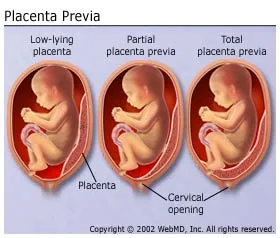
I wouldn't be returning until week 28, for what I hoped was the final follow-up ultrasound, in which I would surely be given the green light for a vaginal birth, since the overwhelming odds were in my favor that, by the end of pregnancy, the placenta would have safely 'migrated' off the os by the minimum 2 centimeters necessary.
So, for the nest two months, my goal was to try to regain a sense of normalcy, if cautiously so. I would follow the recommendations against any exercise beyond the gentlest of yoga and abstaining from any and all sexual activity, but would also practice visualization, including my invented nightly ritual of focusing on positive images of unobstructed birth, while gently massaging my belly with upward-moving strokes (again, not a technique or treatment of any kind, just a form of meditation and positive thinking). I choked down my Floradix dutifully and started to enjoy my visits with my CPMs again. I even brought food on several occasions, and stayed for well over an hour PAST my appointment time. Can you imagine doing such a thing with your own care provider, if you've worked with someone other than a CPM? I laugh even now to think of what any of the CNMs would have done if I'd walked in with a picnic basket, or suggested we order a pizza and get to know each other a bit.
And overall, though I was still concerned, I generally worked on trying to relax about the whole thing, and focus on impending motherhood, which was, after all, the whole point.
Yet for all my fixation on positivity, I was still struggling with guilt over possible contributing factors to the previa. It can happen to anyone, but there are also risk factors that drive up the odds, such as smoking (which I no longer did, but had for 15 years) and prior uterine surgery, including D&C (guilty as charged). And I also often wondered if I was really just blowing the whole thing out of proportion. Some women who have cesareans have a hard time with it in many ways, yet others are really pretty much fine, given the added recovery time. Was I being insensitive to these moms, wringing my hands over the possibility?
[Also? I gained some weight. To say the least. Hey, I was forbidden my normal level of pretty vigorous exercise, plus I happened to be pregnant over the holidays. And I wasn't even allowed to have sex - of any kind. What else was I going to do but eat? I'm not endorsing this behavior, mind you, but in all honesty, this was my emotional response. And yes, I got pretty massive. I hope to be much more healthful if I get a second chance at pregnancy, because it's definitely not a great idea to gain 65 pounds to yield a 7 pound baby - I'm just being honest. Don't follow my example on this if you can help it.]
Fast-forward to 28 weeks. I show up to the CNM/OB practice after much-appreciated 2 month hiatus, this time with babydaddy in tow (prior to this, he had only attended the prenatals with our homebirth midwives, as we still lived in separate states and had to choose carefully). By this point I was feeling pretty confident that we'd be hearing good news, but I definitely needed to make sure I had support this time, just in case.
The technician was the same one I had seen several times before, and she knew how important this was to me. It was evident in her face as she silently scrutinized the screen, my heart racing, her brow furrowing as she searched and searched for an angle that would show us some good news. But she finally pursed her lips together, sadly shook her head, and said she was sorry, but it looked like it really hadn't moved at all since the previous visit 2 months prior, where 'complete' had given way to 'partial', but was mostly a matter of semantics (dealing, as we were, with millimeters).
I remember feeling like the air just went out of the room. "At all? Not even a little?" I said, fighting back tears and unable to make eye contact with Aaron, knowing if I did I would lose it completely. She offered to try looking with the good old transvaginal wand again (see above), and I agreed. But no, it was definitely still right there brushing up against the os. Too close to call safe for a vaginal exit. We could try again in another month, she said, and gave me a sympathetic look and rub on the shoulder.
I went to get my pants back on while Aaron went to wait in the exam room, since we hadn't yet seen the midwife (it was scheduled so that we'd know the results of the ultrasound first, sensibly), aware that the whole office could likely hear me crying. Again, I was self-conscious about whether I was blowing this all out of proportion - after all, this place had hear plenty of tears before, and for reasons much more tragic than mine. The BABY was doing just fine, no one questioned that. And that was and remains the most important thing. So I did my best to pull myself together as I stopped by the nurse's station to give my vitals.
"Your blood pressure is a LIT-TLE high, my dear," the nurse singsonged as she removed my cuff. She meant no harm, I know, but really, come on. The likely reason for the high reading could not have been more apparent. "Well, I'm a little upset right now," I said. "Can we please get a second reading?" She agreed, and let me sit and breathe for a few minutes. The second reading was perfectly fine. I proceeded into the exam room.
This time, we did not have Ms. Worst Case Scenario, but another CNM I'd met with once before. Besides a mild reprimand for the amount of weight I had gained, she was kind but down to earth, who made it clear that her own recommendations were different regarding home birth, but still managed to be supportive of my choices as long as I was low risk - which, at the moment, I was certainly not.
She saw the freshly-updated chart and gave me a look of genuine sympathy. "I know this wasn't what you were hoping for." Still trying to keep it together, I managed to get the words out: "So, do I need to meet with one of the OBs here now? To schedule a cesarean?"
"No, not at all. We really don't need to do that yet. It's getting later in your pregnancy, but there is still time. We'll definitely do at least one more ultrasound."
"Really?" At the moment, I wasn't thinking clearly at all. I had really felt like the jig was up.
"Anne, we WANT you to deliver vaginally if possible. Yes, we would prefer that you do so in the hospital, but whatever you choose to do, there's still a chance it could move." I felt a bit better, and we went through the rest of the brief checkup - everything with the baby looked fine, as per usual.
The following week's visit with my home birth midwives was therapeutic, also as usual. But given the update, I thought it was important to discuss what would happen if the placenta still hadn't moved after my next ultrasound. They explained that, just as if a situation arose in labor that mandated transfer, they would shift into the roles of doulas for me. "We're not just going to abandon you!" This was so reassuring. For all my positive affirmation and work on 'manifesting' a normal vaginal birth at home, I really hadn't let go of the mindset that if I did need to have a cesarean, all would be lost. Nothing would be familiar, I would have NO support, and I might as well surrender every other aspect of my pregnancy and my baby's birth to the authorities. Not a terribly productive or helpful perspective.
We started talking about a variety of ways to make the experience better; more gentle for baby, less traumatic for me. It the medication was making me shake so I couldn't hold the baby, they would help me maintain skin-to-skin contact. If the baby and I needed to be separated, they would stay with me so Daddy could go with baby. They would help me just as much as they would have if we were at home, just in a different role.
So it was from here that I started to work towards making peace with the possibility. Not just "giving up" and resigning myself to a cesarean, as I was oddly ready to do with the CNM, but simply finding some acceptance and letting go of the desire to completely control Lily's birth. Instead of resisting the concept with all my might, it was time to step back, recognize that there was a chance that this might be, and make peace with the fact that if this were the case, I needed to be grateful that there was still a safe way for my baby to be born, even if it wasn't my ideal, and find ways to make the best of it.
At this point, you might be wondering: Had I not chosen to do some parallel care in the first place, and got all my prenatal care with the home birth midwives, what would have happened? What would the CPM approach to a placenta previa be? How would it even be identified if there were no ultrasound involved? Well, many CPM clients (or women seeing home birth CNMs) opt for an anatomy scan at 20 weeks anyway, but if mom wants to avoid unnecessary sonograms in the first place, a skilled midwife can locate the placenta via auscultation - i.e. listening to the flow of blood through a fetoscope or with a Doppler. If neither of the above happens, there is typically a "warning bleed" at about 34 weeks, which would alert mom and care providers to a persistent previa and the decisions would proceed from there. (Any bleeding in the 3rd trimester, though usually painless, should be taken seriously and reported immediately.)
Though my next ultrasound was originally scheduled for 32 weeks, we decided to change it to 34, wanting to give it as much time as possible. I had continued learning as much as I could about previas from various sources. One had explained that the uterus did the most upward growth in the very last trimester, and moreover, it continues in the last part of the last trimester. I also confirmed that the placement of my placenta, though low, was also anterior, which was also encouraging - though a posterior placenta will still move up with the uterus, there is more growth in the front, as the uterus obviously doesn't grow back toward the spine but forward and up.
I had mostly given up on finding any sort of "treatment" when one day, while poking around online, I found a reference to an acupuncture technique that addressed placenta previa. I couldn't believe I never encountered it before, but investigated a little more. It seemed fairly obscure and quite specialized, but why not see if I could find someone familiar with it. The first practitioner I called had no idea what I was talking about. The second had heard of the technique but never done it themselves, though they were willing to learn. I said I'd keep that in mind if I couldn't find another person.
Third time was the charm! She knew what it was, how to do it, and had practiced it before. So for about a month and a half, I went in twice a week to have the needles placed, relaxing for half an hour, continuing my visualizations and affirmations. The time flew by, and before I knew it, it was the week of what I again hoped to be the final ultrasound - but this time, I felt much more relaxed about it. If it hadn't moved, we'd check again at 36 weeks, and then again, and if it had to be, then, que sera sera, and I'd have, as a friend and wise yet snarky mentor put it, "another fucking learning experience."
A few days before I was to go in, I was surprised to the [local CNM/OB practice] pop up on my phone. Lo, it was Ms. Worst Case Scenario, the one who had made sure I knew that "either it's going to move or it's not, and no amount of thinking you do is going to change that." She was calling to recommend scheduling an amniocentesis. Why, I asked? Well, because just in case my ultrasound showed no movement of the placenta, we needed to test for lung maturity so we could go ahead and schedule my c-section.
I was momentarily thrown, but then addressed her calmly. Wasn't there a risk, with amniocentesis, of triggering labor? She admitted that yes, there was. A small one, but still a real one. I then declined the test for the time being, (politely, I promise), told her about the acupuncture, and explained that I just wanted to see what the ultrasound said first, and then, if we needed to start taking those steps, I would take them. I wasn't trying to take unnecessary, reckless risks, I just needed to give my body every opportunity to correct this on its own. She actually quite responsive to this explanation, and said that she understood where I was coming from. In the end, I actually found this phone call rather empowering.
The 34 week ultrasound showed almost 3 cm of clearance off the os. Everyone at the CNM/OB practice shared my happiness, and didn't seem to take it too personally when I told them I didn't plan on returning.
You basically know the rest: not even 3 weeks later, I went into labor and gave birth to my daughter at home, 13 hours later. There were no complications, but my intrapartum bleeding WAS noted as "significant". Not something that was alarming, but something my midwives paid close attention to, making sure I exited the birth pool in order to assess it more clearly. They stayed for 4 hours after the birth, until they were absolutely sure everything was fine, left detailed instructions of what to track and watch for (maternal and neonatal) over the next 24-48 hours then returned the next day as well as the third.
I never had any bleeding during my pregnancy - no warning bleed at all, not even a drop since the extremely faint spotting that occurred right around the time implantation would likely have been happening.
So what's the moral of the story here? Would it have moved without the acupuncture? Possibly. It's not even a stretch to say probably. But not only did it help to finally be able to DO SOMETHING actively, I do think there's a chance it did help, and a tiny bit of help is all that was needed to make a huge, huge difference. The conclusion is also NOT "refuse all interventions and tests". There are times when interventions and tests are absolutely essential - I'm not trying to demonize the CNMs. I know they were good people trying to do the right thing, and that they DID care about both of us. I do think, though, that like many things that seem on the surface to be the "best of both worlds", parallel care is not worth the stress and dissonance of trying to have it both ways, so to speak. A little more faith in my body and a more positive outlook would have done wonders.
I also feel that diagnosing previas as early as mine was diagnosed does nothing but cause unnecessary stress. So many placentas are low-lying or even some grade of previa at the beginning, simply because there is so little surface area during the first part of pregnancy. I found in my reading that the placenta grows faster than the fetus for about the first 20 weeks of pregnancy, in fact, and only then does that ratio start to slowly reverse itself. That, combined with the upper segment of the uterus doing the last bit of growth at the very end, should provide some much-needed reassurance to moms who have been given the scarlet P in an early ultrasound.
What if, however, you happen to be the rare person whose placenta really does remain in a place that blocks the cervix? This was something I had to come to terms with. I think there is some peace to be found in knowing that your cesarean was, unquestionably, a medically necessary one. There's no doubts about it being an "unnecesarean" at all, as there can sometimes be with CPD or FTP. So, though it's easy for me to say in hindsight and as someone who got to have a vaginal birth after all, I really feel there is much value in this perspective. (And hopefully, the experience can also be made as gentle and positive as possible; see below.)
"Previa moms", DON'T PANIC. There is every chance that it will migrate. The odds are SO in your favor. Yes, watch for bleeding and take it seriously, and don't take up pole dancing as a hobby all of a sudden, but really, don't live in fear and let this overshadow your whole pregnancy. Enjoy your baby and have some faith in your belly. As my own mom was fond of pointing out - they're a lot more trouble on the outside than they are on the inside.

Related links:
Part One
Part Two
Part Three
Cesarean birth plans
Doulas and cesareans
Movie: The "natural" cesarean