Showing posts with label doula care. Show all posts

Friday, June 25, 2010

Doctor's Birth Plans and Doula Bans: Think it's not happening in your area?

This is a bit of a "round-up", but I couldn't let the hot (read: infuriating) items that have been circulating in our circles the last few days go without mention - especially since this very issue was brought home to me yesterday in a client meeting, live and local and in-our-faces.

Before I get to yesterday's incident, here's a little background from a while back.

Once upon a time (last November), this sign prohibiting Bradley Method and/or "doulah"-assisted births from a practice in Utah was shared on The Unnecesarean, and everyone had a semi-good time roasting it in appalled mockery:

This came on the heels of one OB's disclosure to his patient, who fortunately took it for what it was and RAN FOR THE HILLS, as of October. Excerpts:

* Home delivery, underwater delivery, and delivery in a dark room is not allowed.

* I do not accept birth plans. Many birth plans conflict with approved modern obstetrical techniques and guidelines. I follow the guidelines of the American College of Obstetrics and Gynecology which is the organization responsible for setting the standard of care in the United States. Certain organizations, under the guise of “Natural Birth” promote practices that are outdated and unsafe. You should notify me immediately, if you are enrolled in courses that encourage a specific birth plan. Conflicts should be resolved long before we approach your due date. Please note that I do not accept the Bradley Birth Plan. You may ask my office staff for our list of recommended childbirth classes.

* Doulas and labor coaches are allowed and will be treated like other visitors. However, like other visitors, they may be asked to leave if their presence or recommendations hinder my ability to monitor your labor or your baby’s well-being.

* IV access during labor is mandatory. Even though labor usually progresses well, not too infrequently, emergencies arise suddenly, necessitating an emergency c-section. The precious few minutes wasted trying to start an IV in an emergency may be crucial to your and your baby’s well being.

* Continuous monitoring of your baby’s heart rate during the active phase (usually when your cervix is dilated 4cm) is mandatory. This may be done using external belts or if not adequate, by using internal monitors at my discretion. This is the only way I can be sure that your baby is tolerating every contraction. Labor positions that hinder my ability to continuously monitor your baby’s heart rate are not allowed.

* Rupture of membranes may become helpful or necessary during your labor. The decision as whether and when to perform this procedure is made at my discretion.

* Epidural anesthesia is optional and available at all times. The most recent scientific data suggest that epidurals are safe and do not interfere with labor in anyway even if administered very early in labor.

* I perform all vaginal deliveries on a standard labor and delivery bed. Your legs will be positioned in the standard delivery stirrups. This is the most comfortable position for you. It also provides maximum space in your pelvis, minimizing the risk of trauma to you and your baby during delivery.

Amazing. Trust me, it goes on and on, I just had to crop it for length.

So just the other day, this letter from an Ohio practice came to light, courtesy of Birthing Beautiful Ideas. Same crap, different zip code:

The team at Kingsdale Gynecologic Associates is so pleased that you are expecting. We look forward to helping you enjoy your pregnancy and hope to provide a meaningful and safe birthing experience.

Because of concerns for increased risk to you or your baby, the doctors at KGA have made a thoughtful, unanimous decision not to allow doulas to participate in the birthing process. It has been our experience that they may serve to create a state of confusion and tension in the delivery room, which may compromise our ability to provide the safest delivery situation possible for you and your baby.

Again, with safety in mind, we have created a Kingsdale Birth Plan (which can be viewed in the obstetric packet provided at your initial visit), outlining the philosophy of our doctors with regard to labor and delivery. It is our opinion that other birth plans are unnecessary. We feel that our many years of obstetric experience in a setting of modern day challenges (larger babies, more difficult deliveries) enable us to provide sound judgment with regard to each woman’s particular needs during her course of labor.

Thank you for your understanding in our hopes of facilitating a safe pregnancy and birth process.

Patient’s signature

________________________


She goes on to post a revised version of this letter (make sure to check it out, it says everything I would have said and more), and then, the next day, shared a copy of the actual "Kingsdale birth plan" this practice offers. Click over to read it itself in all its chocolately paternalistic glory.

To top it all off, The Feminist Breeder had JUST posted this unknowingly prescient piece the extremely revealing chart found in Marsden Wagner's book "Born in the USA", exposing the downright contempt many (of course not all) OBs have for patients who dare to think for themselves.
It both precipitated and underscored the garbage from the Kingsdale practice that hit the net the following day.

So, with all this buzzing in my head, I went to meet with a really wonderful young mother and prospective practice labor support client. She's very interested in having doula support, as there's not a lot of other support in her life, and has several pressing reasons of her own that she'd like to pursue a natural birth if at all possible. Hasn't read a whole lot yet but is very eager for information (I lent her "Your Best Birth" to start with) and is starting a childbirth ed course next week. All sounds good, right?

Well, she's also slowly figuring out that she may have to change care providers, as they recently informed her that she is allowed to use one of two pre-approved specific doulas - anyone else would be prohibited. I would have been more stunned if I hadn't just read and re-read all of the above, but as it was, I just had to sigh and shake my head.

If I were one of the two approved doulas, I wouldn't know whether to be flattered or appalled. (I'm not at all insulted at not being included, as I literally haven't even gotten started attending births in the area yet.) Frankly, I'm leaning towards appalled. I'd want to know WHY I was kosher and others weren't - was it because I was most likely to go with the hospital ride and not make waves? It's also possible that some other doulas had been too confrontational, perhaps, and gone beyond our scope of practice. Could it be a combination of the two?

Regardless of the reasoning, I'd so frustrated by all of this. It seems like we've been making progress with educating the public about doulas, and improving doula training, and increasing access - but then, what good does it do if more and more OB practices are issuing official kiboshes on us when it comes time to actually go into action? The bottom line probably does fall to the consumer.

Readers who are appalled at the Aspen Women's Health Center, the Kingsdale Gynecologic Associates, the doctor in Texas, and the group practice here in Erie - don't assume it's not also happening in your own backyard. We advocates can blog about this stuff until we're blue in the fingers, and we will and do, but it really comes down to the individual women themselves. Mothers who care about their births (no matter what their own goals are), have to stop patronizing care providers like this, and let them know why.

P.S. This was one of my entries for the Unnecesarean's Photoshop contest:

P.P.S. But wait! There's more! The Feminist Breeder and I basically simulposted today, and in her latest, she shares YET ANOTHER doctor-generated mandatory "birth plan", this time from the Chicago area practice WomanCarePC. I can't even be buggered to quote it here - click on over to read, it's exactly what, by the end of this post, you'd expect. But I will quote TFB herself, echoing my sentiment on using our power as consumers:

We all want to believe that it’s just angry women making hostile accusations toward well-meaning OBs and hospitals. Calm down honey, it’s all in your head. However, it’s pretty hard to ignore when the obstetricians are the ones sending out their patriarchal beliefs in writing, and then asking pregnant women to sign it.

There is a solution. Fire them. Take back your body. Refuse to be treated as a wombpod. Let them know that we ARE consumers in this process, and if they won’t treat us with respect, then by golly we’ll get our birth attendants elsewhere, thankyouverymuch.


*****


In medical billing courses, you’ll learn about the birth process.

Tuesday, April 27, 2010

toLabor Doula Training, sponsored by yours truly!


Yes, right here in Erie! ERIE NEEDS DOULAS. I am both delighted and fortunate to be making this training available to women right here in town. The workshop takes place over the course of three days, from June 4-6.

ToLabor is the professional organization formerly known as ALACE, providing the same woman-centered training and certification which has exceeded national standards, bridging technical knowledge with a compassionate personal touch. So here's the scoop:


Is there a desire in you to:

• Help pregnant women and their families recognize what options there are in pregnancy, labor and birth?
• Provide evidence based information for the healthiest maternity care?
• Provide practical suggestions to help pregnant women relax during labor including physical and emotional support?
• Help a woman find her voice in order to advocate for herself and baby?
• Encourage an environment of calm within her team of care providers?
• Offer follow-up support in the postpartum period?


A toLabor Professional Birth Doula provides support for the pregnant woman and her partner, continuous care throughout the labor and birth to help them fully experience their birth.

The workshop includes: an introduction to physical assessments, adding an aspect of experiential learning unavailable in other training programs; these experiential exercises serve to enrich and empower all those who attend our workshops.


Tuition includes: the entire training and certification process, the training workshop, processing your work, the exam, the certificate itself, and activates membership. Before discounts, the total cost is $425. Payment plans are available. Enroll for the workshop 30 days in advance & receive a discount of $30. Past graduates of our training who are current members, may attend a workshop again for only $200. Previous doula training discounts are also available.

Erie PA Birth Doula training June 4 - 6, 2010
Contact Anne 860-922-6439 annetegtmeier[at]yahoo.com
or
www.tolabor.org 804-320-0607 tolabor[at]gmail.com


Sunday, April 11, 2010

Weekend Movie Double Feature: "DOULA!"

(I think that title's best expressed with jazz hands. DOULA!)

Had to sneak in a second movie this weekend, because look! "Doula! The Ultimate Birth Companion" is coming soon!


“DOULA!: THE ULTIMATE BIRTH COMPANION” is a NEW 65 minute documentary film that follows three BIRTH DOULAS as they support three couples before, during and after their births.

The film features actual footage of doula supported births.

We also see POSTNATAL DOULAS providing practical and emotional support to new mums after their babies are born.

Here's a statement by the director and producer:

Hand on heart, I wish I had known about doulas when I gave birth two years ago. I had quite a difficult birth experience (failed inductions followed by a c-section) and I now know that with the help of a doula, it would have been a completely different and much more positive experience.

I found out about doulas after I had made REAL BIRTH STORIES, a documentary series telling the birth stories of five couples who had just become new parents (myself and my partner were one of the couples featured in the series!) None of the parents in Real Birth Stories had hired a doula and in fact, before this point, I had never even heard of a doula and had no idea what doulas do.

I did some research and started to meet some doulas. Every single one was incredibly enthusiastic, caring, warm-hearted, intelligent, knowledgeable and all were absolutely committed to giving expectant parents the best possible experience before, during and after the birth. Then when I filmed my first birth, something clicked. I saw with my own eyes the difference a doula can make. The doula made the birth magical.

The doula prepared the birth environment, made tea for everyone, massaged the mum’s feet, supported the dad, suggested labour positions, reminded the mum to breathe, soothed, comforted, encouraged, phoned the aunt and grandma to come immediately for the imminent birth, took photos and then when the baby came, she made sure the mum, dad and the beautiful new baby spent their first precious few minutes quietly together, uninterrupted as a new family. Then the doula helped the mum deliver the placenta before making up the bed for the new parents to sleep in.

The doula never told the mum or dad what to do but was just absolutely there for them the whole time, doing whatever needed to be done and I believe she was instrumental in giving the parents the birth they both wanted and deserved. The doula made all the difference. And in those few hours, I totally “got” what being a doula was all about.

And that’s why I wanted to make this film. So that other people “get” doulas. To help spread the word about how amazing having a doula can be.
I'm giddy.

Monday, February 8, 2010

Mothering the mother in ALL circumstances: doulas and cesareans

I recently had the opportunity to do a consultation with a mother who is considering hiring a doula for her medically necessary scheduled C-section. Being me, I fear that I might have barraged her with a garrulous deluge of overinformation, but the interest was definitely there, and a good connection was made. (It would be a new experience for me, too, so my eager enthusiasm may have added to the overload.) Hopefully she'll be able to process what we talked about in her own time, along with the folder full of printouts I gave her.

So, what ARE the advantages of having a doula present at a cesarean, especially a planned one? As I wrote in the previous post on cesareans and birth plans, isn't the whole idea to use them (plans and doulas) to avoid having cesareans in the first place?

Yes and no. It's true that a woman seeking a natural or minimally interventive childbirth is doing herself a great favor by seeking out doula support. But A) There are, of course, rare times when complications can arise, even in a well-supported normal birth, and a cesarean truly is a lifesaving situation. Should the doula pack her bags and take off at that point? Of course not. She probably will not be allowed in the OR if the father is present, but there are other ways she can continue to be of great service, as I'll discuss in a moment.

And B) On a broader note, doulas are there to enhance ALL birth experiences for all women, and priority one is to support mom's own choices, helping her to achieve her own goals. The mission statement for doulas is often summarized as, simply, "mothering the mother". Yes, of course we do everything we can, within reason and within mom's parameters, to help her avoid a cesarean if she doesn't want one (and most women hiring doulas obviously don't), but we are not just vaginal-exit-only cheerleaders. This seems more obviously logical if the need for a c-section arises out of a spontaneous labor, but though it's rarer, there's no reason a doula would not be valuable, in some different ways as well as some very much identical ways.

So, then, what are some of the specific things a doula can provide to a mother having a cesarean? Let's say for the sake of argument that this needs to be a scheduled event (though much of it applies regardless). I would say there are three primary advantages to having a doula in this situation.

First of all, a doula can help the mother develop a birth plan that makes the absolute most out of the situation. The choices will have to be approved by the doctor and hospital, of course, but as I wrote in my post on c-section birth plans, there are actually a multitude of choices to be made. Some of those choices may be brought up by your doctor, but many others may not - they might even be new to him or her, and there are good doctors out there who are willing to try new things and learn and grow in their practice. Check out that post for a detailed discussion of the options available. The same doula can educate the parents about the whole overall process as well, if their doctor isn't able to take as much time explaining things as they'd like.

Secondly, it is a truth that more babies born via cesarean may have to spend some time in the NICU. Should that happen, typically the father will go with the baby - leaving mom alone and unsupported. The delivery of the baby, once everyone is prepped and ready, only takes a few minutes (5-15, depending on circumstances), but putting mom back together again takes significantly longer, generally 45 minutes to an hour, and that's assuming there are no complications. This can be a very difficult time for mom if her baby has been taken away, and having the doula step in for emotional support and companionship can make a huge difference.

The third major advantage is helping to get breastfeeding established. This is more challenging for moms in terms of positioning, even for experienced mothers with existing children, and can be particularly confounding for a first-time mom who is learning to nurse for the first time. Milk can also take a bit longer to come in (remember, though, 3 to 5 days is perfectly normal), and sometimes cesarean babies can be sleepy due to medication. If the baby is having to stay in the NICU, a doula can help mom to get pumping right away, establishing her supply and providing the baby with the best possible nourishment for him or her. All of these extra challenges are much easier to face with doula support.

Now, there are definitely some L&D nurses who are very good with breastfeeding, but, it must be said, there are sadly some who are not. Many a breastfeeding relationship has been sabotaged by hospital practices, even with an uncomplicated vaginal birth. And even the nurses who are good can be in short supply if you happen to be there on a particularly busy day. Same goes for actual lactation consultants. Some hospitals have them, but availability (and quality, too) can be limited.

Those, as I said, are the big ones. There are a lot of other little things that a doula can help with along the way - guiding both mom and dad through the admissions process; helping mom relax during the prep for surgery, including the epidural or spinal (a big fear for a lot of women); taking pictures as much as is desired and possible; keeping communication going between parents if they are separated by a NICU stay, and keeping mom up-to-date on baby's status; establishing skin-to-skin contact as soon as possible, which can be difficult if mom is having trouble with uncontrollable shaking from the anesthesia; running interference with relatives if needed, even running errands for the parents.

But hold on here, are you even allowed to have a doula in the operating room? In some cases, no. If the need for one arises during labor, it's true that it is very unlikely that a second support person will be allowed, though the doula can be standing by should dad have a hard time with the procedure or become ill or pass out - rare, but it does happen. (The other advantages of doula support still remain.) But if it is a scheduled cesarean, it is possible that special arrangements can be made in advance. As doula Rachel Wickersham explains:
Though it is possible your caregiver may initially be resistant to the idea of a doula in surgery with you and your partner, you may be able to convince him or her of the possible benefits to you - especially if you work with a doula who attended at least a few. And this may not be as far fetched as it may seem. I know of at least one practice in which there are doulas who specialize in cesarean.
I came across one mother's story of how invaluable her doula Shelly was for her own cesarean birth at Fort Wayne Doula Network. After attempts to turn Alison's breech baby via external version were unsuccessful, the family reluctantly decided to proceed with a C-section.
Shelly was very sympathetic and reassuring to us both. Mostly without words. Which we appreciated. She and Doug left the room while they prepped me for surgery. When they came back we made sure Shelly had her camera. Although we cried through the c-section a little it was very exciting too.

From the moment they got the baby's little bottom out Shelly started snapping pictures and showing them to me so I felt more a part of what was going on instead of so disconnected. It was great to have Doug and Shelly there so one person could be with me and one with the baby at all times until I joined him in the recovery room. She also unlatched my arm to touch the baby better after my pitiful attempts to stroke his little head while restrained for the surgery.


Shelly was intregal in getting me nursing the baby within 40 minutes of birth (not bad for a c-section!) She continued "nursing" Doug back to health a little bit by getting him what he needed and also helping out so he could get to the post partem room to rest for a bit. I was wheeled to my room with my sweet baby latched on and nursing like a pro!

Once we were settled in our room for a little bit Shelly asked if it would be ok timing for her to slip out for a bite to eat and to develop the pictures. When she returned she had an album of all the pictures she'd taken. I cried as I flipped through them... I would continue flipping through them MANY times over the next few weeks until I had memorized them so it actually felt like my memories instead of the actual memories I had of trying so hard to see everything and be a part of it while my baby was so far away at the little bassinet as they measured and treated him (the whole time he's just wailing for Mama)

I can't describe how much it meant having Shelly there. I am trying to in this email, and I tried to when I wrote her a thank you note after coming home from the hospital. But she was much more than a doula to me that day. She was a mother figure that I so needed. She filled that role when I needed it most. She was concerned for me and excited for me and I felt as if I'd always known her. She was truly the only advocate I really felt I had that day with me. My midwife was not able to be there during the c-section, and Doug was still kind of coming around and trying to get to feeling better himself. It was a very emotional day- but thanks to Shelly and her support the deliriously joyful emotions outweighed the negative. I had a happy, healthy (Big) boy and was well cared for with my medical needs.

Shelly helped give me memories by taking pictures of what I otherwise would not have seen. I can't tell you the value of that. It's priceless. I wonder if a doula isn't maybe even more needed w/ a c-section than a normal labor/birth- for the emotional side of it anyway. Even though it's such a shorter period of time. I guess everyone's experience is different. Shelly helped make the overtones of the day very happy. I just don't know how many different ways I can say it.
Two other great pieces I've found online do a great job of explaining the value of doulas with C-sections: Doula for a Cesarean Birth, by Robin Elise Weiss and the aforementioned "Is it worth hiring a doula if I'm going to have a C-section? by Rachel Wickersham.

Did a doula help you during your C-section? Have you been a doula at cesarean births? Please share your stories!

UPDATE: Make sure you check out the video about the "Natural Cesarean", a piece that began circulating after this post was originally published. The demand for this approach definitely seems to be growing!

Tuesday, January 5, 2010

Quote pop quiz

"You are assisting at someone else's birth. Do good without show of fuss. Facilitate what is happening rather than what you think ought to be happening. If you must take the lead, lead so that the mother is helped, yet still free and in charge. When the baby is born, the mother will rightly say: 'We did it ourselves......!' "

Who do you think said this?

(If you saw this on my Facebook profile, you're lovingly disqualified. And no Googling!)

Saturday, January 2, 2010

Weekend Movie: Taye Diggs, his "Warrior" . . .

. . . and the emergence of his "Inner Gangster".

This is actually from back in October, but if you haven't seen these clips, I thought they were well worth sharing, since we were discussing fathers and doulas just the other day. Here, Taye Diggs discusses the recent birth of his son on Jimmy Kimmel. I just love how amazed and reverent and loving he sounds about the whole experience. He even discusses placenta encapsulation! (Or, as Kimmel hilariously calls the placenta, "the big gross follow-up baby".)


Side note: NOW I remember where I learned that they use cream cheese for vernix on in TV births! I was racking my brain on that one the other day. Also note: Taye and Jimmy were confused as to the origin of the word "doula". It's actually adopted from the Greek, meaning, simply, "woman who serves".

And a similar, shorter appearance on Ellen. (When he refers to a "midwife lady", he actually means the doula, it was just a slip.)


I think he deserves major credit for talking about all this openly, and also for managing to do it with humor but WITHOUT resorting to a lot of the lazy, hackneyed, husband-disgusted-by-childbirth cliches we've all come to take for granted in the media over the years. Congrats again, Taye and Idina. Hope little Walker is doing stupendously!

Monday, December 28, 2009

Fathers and partners and doulas, oh my!

The blogger known as Baby Making Machine is prolifically sharing her pregnancy experience, and much to her credit, she is asking a lot of questions about everything, including birth. One of the topics that has come up for her is to doula or not to doula, and she blogged about one specific, lovable, handsome "doula dilemma": namely, her husband.
He had a few arguments I tried to take into consideration: 1. Doulas are for rich people. 2. I want to help, I want to be your doula (or my "dulla oblongata," as he jokes).

The first argument, while I can see his point isn't necessarily true. To him, if we can make it through labor like many of our family and friends have without one, why spend the money? "Having someone you pay there to help is something rich people do." Well... Many doula's I've found in my area don't have rates on their sites because they work with people to set the right price on an individual basis. Most I've found prices for seem to range from the $200-$1500s but I hear some are in the $2000s, depending on location, experience, services, etc. Most of my friends seem to either have a friend and get one for free, or paid about $300-$600. Everyone has said it's worth every penny.

Now, looking at those numbers my husband says no way. He's rather use that money on things for the baby, or classes, books and material we can take together to be prepared for labor. But I heard you can get doula's who are getting certified and need live births to help you for free! I wrote to my local DONA lady to get the list of women in my area who will be certifying over the next year so I can contact them about helping me out. I told my husband this and he was a little hurt that I was so insistent on this. Which brings me to the next point... Him wanting to help.

I've read great articles and posts here and there about doula's helping husbands know how to help their wives, but he really wants to be the primary support. He really hasn't had a strong opinion about too many things in this pregnancy process unless I pry, so having him out and tell me how he really feels about it made me think again. He told me he wants to take classes with me and learn how to help me through it, but he doesn't want someone with us 24/7 and "taking his place." I can even picture him shying away because there's an extra woman there, and not wanting to help as much... If I had other help.

This is something that comes up for other women, too, so I thought it was worth addressing at some length. I started out just responding to her blog, soon realizing it was definitely a reply-turned-post, and then I couldn't get my comment to appear on her page at all due to some bogus HTML issue, so I just threw it all up here, period. Hope this is helpful to FutureMama (as she goes on Twitter) and to any other mom out there with a reluctant partner.

Again, kudos for taking such a thoughtful approach. I can already sense that this might be a reply-turned-post . . .

I want to briefly echo what Mommy Bee said about epidurals: I completely respect your right to make an informed choice, but do be aware that just because you've decided you want one does not guarantee that you will get one, or that when you do get it it will work, so the need to be prepared and to have support is just as valid even if you feel an epidural will likely be part of your birth experience. There are all kinds of benefits to laboring for quite a good ling time without one, reasons having less to do with the effects of the drugs on the baby and more to do with the effective progress of dilation and with optimal positioning of the baby for birth. As you'll learn when you go through childbirth ed classes and/or read further on your own, the baby's position in your pelvis is key, and the more movement and versatility of position you can bring to your labor the better. Doulas are experts here.

And let's say you labored a good long time without an epidural, and then decide to go ahead and get one. It's not like it's just Game Over at that point: there are still so many decisions to be made, and you have a say in every. single. one of them. Are you going to receive Pitocin as well? If so, how much and how quickly? What about AROM? What about episiotomies? There are so many choices to be informed about. (Do read "Your Best Birth" if you haven't already! It breaks the whole cascade of interventions down masterfully and easily. Immensely readable.) Due to her experience and education, a doula can be vital in keeping abreast of your goals and preferences, and help you ask all the right questions. She helps you advocate for yourself.

As for whether a doula is desirable if you aren't necessarily going for a 100% natural birth, my honest opinion is absolutely. Even if you have a c-section, a doula can be a godsend in dealing with hospital personnel and procedures and protocols. Marfmom's experience is a good example of this. I actually have an upcoming post planned for my own blog on exactly this topic, as inspired by a Twitter conversation the other day: how doulas benefit cesarean birth experiences.

Anyway, I can understand why your husband feels so strongly that he wants to be the primary support - and he ultimately will be, either way! But others here have given good examples of situations where, for all their good intentions, their partners were unprepared for the reality of the hospital setting. No matter how much they read (and if he does do a lot of reading, that is AWESOME and all the better, I don't mean to discount that; some husbands can't even manage that) and how attentive they are in a childbirth ed class, many of them become deer in headlights when faced with the White Coat of Authority suggesting something you both know you don't really want. At those moments, mothers sometimes lose their former allies to fear, and suddenly the man who had been their rock and their solace is now saying "Well, honey, maybe we should just do _____ after all; he IS the doctor . . ."

I'm not saying this WILL be the case with your husband - he really does sound like a peach. But some of the other husbands caught off-guard were wonderful guys, too - it's just a completely foreign experience for them, navigating the thorny maze of hospital protocol.

And this is where doulas are trained and experienced and prepared. It's not just about knowing back massage techniques, offering sips of Recharge, repeating affirmations with you, helping you walk around, bounce on the birth ball or relax in the tub, though those are all useful too. It's about helping both of you make your way through this sterile, high-tech, foreign land.

That brings me to the other point I wanted to mention. You are becoming a mother that day, and that, along with bringing this new being into existence, is the main attraction, of course. But your husband will also undergo a transformation that day. He is becoming a father. As much as he intends to be there for you, he is, by definition, also having his own experience of birth. This is a good thing! And he can still support you, and can still make attending to your needs at the top of his priority list. But the fact remains that a doula is the only person who is 100% there only for you and your support. This takes some of the pressure off your husband. Space has now been created for him to both share this experience with you AND have his own experience of transformation. He will still be your rock and your solace - and he can now breathe a little easier, knowing that someone is there to help you both advocate for your needs.

I hope that came across with compassion - it was meant to. It's truly hard for men to admit that they need help sometimes, especially when it's help in an area that they feel they SHOULD be responsible for. Often they insist on being the sole supporter simply because they think they should be, when in reality they might not feel comfortable once they're actually in the situation. When this is questioned, they can feel their authority threatened, even when they know, rationally, that this isn't really the case. I say let's give the guys a break!

As for the notion that doulas are for rich people, I wholeheartedly disagree that good care and support should only be reserved for the wealthy. This is why doulas have been fighting to be covered by insurance, and are finally starting to succeed, and why many doulas will work on a sliding scale, and why there are organizations providing doula support to low-income mothers in some areas (this is not available everywhere YET, obviously, but you'd better believe we're working on it). And even when none of the above apply, doulas in the certification process will work for free or close to it.

One final question: Labor can last a long time. Ask him how long can he go without using the bathroom. If for NO OTHER REASON than filling in for him so you won't be left abandoned when he needs to pee, you deserve to have this.

:^)

To wrap up: I second (or third, or whatever) the notion of interviewing a few to see who you mesh with, and I agree that it's a good idea to let them know of your husband's ambivalence in advance. If they're experienced doulas, they've addressed this before, I assure you.

And one last idea on cost: if you don't find someone who is in the process of certifying (which I am SURE you can, if you decide to go that route), you could also consider putting it on your registry, so to speak. I can think of no better shower gift, myself (unless it's a postpartum doula). There just might be someone in your life who would be happy to provide such a boon to you. Why not put it out there?

Friday, November 13, 2009

Postpartum Doula FAQ

. . . Or, "The Best Baby Shower Gift of All Time".

I put these two documents together last weekend for a health expo, the first part giving general info about postpartum doulas, and the second getting into some more FAQ detail, and thought I might as well share it here! It still needs some tweaking, and I'll be jazzing it up with a logo and some coherent color schemes and all, but I think the content is decent. Feedback?

*****

What IS a Doula?

From Doulas Organization of North America (DONA): “The word ‘doula’ comes from the ancient Greek meaning ‘a woman who serves’ and is now used to refer to a trained and experienced professional who provides continuous physical, emotional and informational support to the mother before, during and just after birth; or who provides emotional and practical support during the postpartum period.”

So what exactly is a Postpartum Doula?

She is a specially trained woman who comes to the home of a new mother and provides evidence-based educational, emotional, and physical support after birth. This allows the new mom to rest and bond with her new baby during her much-deserved “babymoon”, and helps the whole family transition into their new roles during the first three months of life, sometimes referred to as the “fourth trimester”.

What can a Postpartum Doula do for our family?

*Basic breastfeeding support
* Instruction in newborn care, such as bathing, diapering, babywearing, and infant soothing
* Teaches coping skills for both parents
* Aids in mom’s physical recovery from birth
* Meal preparation
* Household organization and light housekeeping
* Errands such as grocery shopping
* Infant and sibling care
* Emotional support and companionshipInformation and professional referrals

Why should we hire a Postpartum Doula?

The postpartum period is a time of recovery and transition for the new mom. Surrounding her with emotional support, attending to her physical needs, and caring for her home and family allows her time and space to rest and recover from the birth, learn to feed her new baby, and smoothly transition into her new role with genuine self-sufficiency.

The bottom line: the presence of a postpartum doula has been shown to reduce the incidence of postpartum depression, increase the development of successful breastfeeding relationships and enhance ALL relationships in the family as they welcome their newest member.


*****

Postpartum Doula FAQ

For how long does a mother usually hire a postpartum doula?

This depends on the needs of the family. A postpartum doula is typically engaged from between 2-6 weeks, starting as soon as possible after birth (easiest if arranged ahead of time), but this care can extend through the first three months - the “4th trimester”.

It’s not a test of competence or strength to be able to "do it all by yourself." New moms were not meant to be alone during the postpartum period. Much attention is paid in our culture to prenatal care, and to birth itself, but postpartum care is lacking in many form. Many new mothers feel overwhelmed and isolated in the first few months of motherhood, even if they do have family nearby - and especially if they don’t.

It’s important to gather support for this significant period in your life so that your newborn can be welcomed into an environment where the mother is calm, as well-rested as possible, and supported.

When do we arrange for this service?

Meeting your postpartum doula and planning for care ideally happens prenatally. This gives mom and the doula plenty of time to talk about goals and expectations, and discuss scheduling. When you first make contact, you’ll be given an intake form to fill out at your leisure, which will be reviewed at your consultation, which is free of charge. Of course, postpartum doula care can absolutely still be arranged after the birth, but scheduling may be a bit more challenging, and may miss out on the first few critical days and weeks, when help is most needed and effective, especially regarding breastfeeding support.

The best case scenario is where mom receives a gift certificate for this at her baby shower, and she sets up a plan and gets to know this new support person in advance of the blessed event, secure in the knowledge that this extra support will be awaiting her!

How long does a postpartum doula spend with a new mom each day?

Again, this depends upon the needs of the mother. Many women schedule a four-hour visit 3 to 5 times per week. Some doulas are able to do longer shifts with enough advance notice. A few also do overnight shifts.

My husband has two weeks of paternity leave. With his support, wouldn’t a
postpartum doula be unnecessary?

Don’t underestimate the impact of sleep deprivation on both parents, nor the learning curve for both father and mother. Having an extra set of experienced hands to reassure, teach, and support can make all the difference in the transition that the whole family is making. This is particularly true for first-time parents, though families with older children also need the extra help in different ways – see below.

My mother and mother-in-law (or other family) are coming to help out for the first 2 weeks. Won’t they cancel out postpartum doula care?

Care from friends and family is incredibly valuable. Feeling connected to your family at this time in a new mom’s life is wonderful. There’s no “substitute” for it. Doula care can still enhance this time for the entire family, helping everyone to adjust to their new roles, and also offers evidence-based information to the new mom, something which some family members may not always have. Care from friends and family tends to peak within the early weeks, with lots of visits and casseroles, and then dies down, while mom may still need just as much help. Doula visits can then be scheduled more frequently to make up for the difference.

What if this is not my first baby? I already know how to breastfeed and care
for a newborn--why would I need a postpartum doula?

The needs of a first-time mom are different than those of a mom with an older child or children, but postpartum support can still be vital. In fact, many members of her own support system may think exactly what was posed in the question: She’s done this before; she won’t need as much help this time. On the contrary, mom may find herself in need of more support than ever, learning to balance the needs of her other children with those of the new baby.

Additionally, mothers who had an easy time breastfeeding their first baby may still encounter some challenges with subsequent children, and mothers with older kids can still be susceptible to postpartum mood disorders. All of the above can be eased by a postpartum doula.

This is the perfect baby shower gift for a family with existing children, as many of the “big ticket” items like car seats and breast pumps and high chairs have already likely been purchased with previous babies, and many clothing items and the like will be hand-me-downs.

None of my friends ever had a postpartum doula—so why would I need one?

Chances are, the reason they didn’t have one is that they simply didn’t realize this type of support is available. Ask your friends who have had a baby if they would have liked to have had the kind of help postpartum doula offers. Try asking them. They’re likely to tell you exactly why you would want one!

What do you offer for multiple births?

For reasons both obvious and subtle, the transition into motherhood can be even more challenging for a family bringing multiples into their lives. On top of the usual education, emotional and physical and support (all doubly needed now), the postpartum doula can help the new mom discover strategies to make her life easier with her new little ones, particularly in the realm of household organization. The doula can also help the new parents find resources especially for parents of multiples.

We have not budgeted for this expense--how could we justify it?

The presence of quality postpartum support can make a huge impact on a mother's physical recovery, emotional state, and success with breastfeeding. Getting the right start can be truly priceless. Another doula says: “The best response to this question was one I heard from a set of grandparents who were paying for a postpartum doula for their daughter: ‘We put aside money for our child's college education years in advance--but is not this postpartum period, and the experience the child has in these first months, just as important?’”

Family and friends who want to help, but are unable to offer much if any postpartum support themselves, are often very grateful for the chance to hire a doula to go in their place. It should be noted here: a gift certificate for a postpartum doula is one of the best baby shower gifts of all time!

Also, be sure to submit to your insurance. Some insurance plans will cover part or even all of postpartum doula services. Speaking of:

Does insurance cover the services of a postpartum doula?

Many insurance plans will reimburse for some or all postpartum doula services. We can provide sample letters of authorization from your doctor or midwife to help in this process.

Sources: DONA International, Postpartum Doula Services of Northern Virginia

*****

Oh, and I finally decided on a business name. It is FAR FROM original, but in the area I'm currently living, I needed something that would clue people in immediately as to what's being provided, and inspire them to look further into it, as well as something that could also cover labor support eventually. So I went with:

BABYMOON
Postpartum support at home for mom, baby, and the whole family.

Like I said, NOT ORIGINAL, but it gets the message across. I can also tweak the tagline to include labor support once I'm ready to start attending births. Someday . . . *sigh*

Saturday, October 10, 2009

Weekend Movie: Do You Doula?

Here's a short documentary that I think is a mostly very good public service for doulas as labor support:


Wait, what does she mean by "mostly", though?

I have to quibble, though, with two little things, and I'm very interested in what birth doulas have to say about it. At about 2:11, in the section on "What is the doula's role when working with hospital staff?" a mother states that a doula is "an important liaison between the mother and the [hospital] staff", and shortly thereafter, a doula states that she sees her job as "running interference" between the family and hospital personnel.

Eep. I haven't even competed my birth doula training yet, and I know this is an extremely dicey issue. Using language like "liaison" and "running interference" is a bit misleading, and some doulas HAVE gotten into trouble when overstepping their bounds. You risk alienating the staff, or possibly getting kicked out of the room altogether, leaving the family with no support at all.

Still, the video is overall pretty good, and has a very positive tone. What do you think? I'd love to hear from moms, doulas, nurses, and others.

Monday, September 28, 2009

Becoming Alice

So, I have my first gig as a postpartum doula this week. I'm so excited, and also really anxious about it! We spoke on the phone tonight. She just had her fourth baby on Friday - talk about fresh out of the chute! I'll be doing about 7-8 hours Tuesday-Thursday this week (and we'll re-evaluate then to see if she wants one additional week).

I was going to have to limit it to 3 or MAYBE 4 hours due to Lily being brand new to day care (sob) . . . but then my client asked if I would be okay with bringing Lily with me, which pretty much solves everything! I wouldn't have presumed to suggest it myself, especially my first time out, with a brand-new client, during our first week of service to boot, but she just needs the help so much that it's worth it to her. I'm reducing my rate a tiny bit as a result of that (knowing my attention will be slightly more divided), and it was already very low due to the fact that I'm currently in the midst of the training process, so I feel this is a fair tradeoff.

As she already has 3 other kids, all boys, a lot of it will be helping care for the other kids and doing household chores. That's all good. Here's what I'm most anxious about, along with generally being sure that I'm really being of value to her: she said that she really needs a lot of support with breastfeeding. When I first learned about her, I assumed she'd have it down pat since this was her 4th kid. But she has inverted nipples, and thus needs a lot of help. Yes, she's experienced, but part of that experience includes knowing that she needs extra help. Goes to show what assuming will do . . .

I know what you're thinking - but Anne, you know tons about breastfeeding. And I do, yeah, but having gone through such a trial myself, and knowing just how absolutely BAFFLING, not to mention emotionally charged, nursing difficulties can really be when you're in the midst of it . . . I'm just so afraid I won't be able to help her enough. My own nipples were a little flat, so I do have some experience with it, but inverted is even harder. I'm of course going to look up everything I can on inverted nipples on kellymom and in Jack Newman's book, which I'm going to do here in just a minute.

Anyway, wish me luck! Any advice you have for dealing with inverted nipples would be most welcome, too.

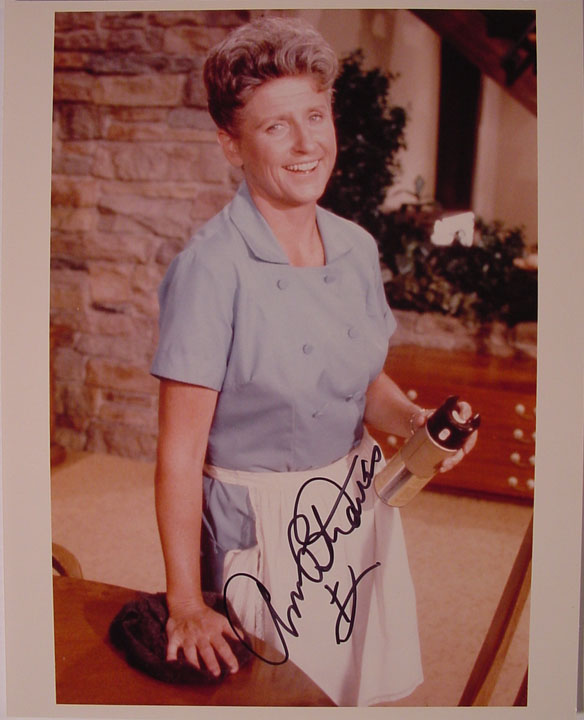
(She told her husband "I need an 'Alice'," which is kind of a great description of what postpartum doulas offer, if The Brady Bunch featured lactation information and help with care for a tender perineum.)